 Sunil Rao
Investing in Swedish real estate is one of the most stable capital allocation strategies in Northern Europe. However, international and domestic investors quickly encounter a unique Swedish paradox: while investing in individual residential apartments is heavily restricted by cooperative housing boards and strict rent-control legislation, commercial real estate operates under a dynamic, business-friendly legal framework.
Whether you are considering light industrial warehouses, suburban logistics facilities, city-center retail spaces, or multi-tenant office buildings, purchasing commercial property as an investment in Sweden offers attractive cash-on-cash returns, contractual inflation hedging, and significant corporate tax advantages. This guide explains how commercial property transactions work, the legal mechanics of renting out commercial premises, top advisory portals, and how commercial investments compare against traditional residential property.
1. The Commercial Property Investment Landscape in Sweden
Commercial property in Sweden is classified under real estate law as non-residential premises (lokaler). Unlike residential apartments, where social housing policies prioritize tenant affordability over landlord yields, commercial leases operate on commercial contract law principles governed by Chapter 12 of the Swedish Land Code (Jordabalken).
Investors typically target four main sub-sectors in the Swedish market:
- Industrial and Warehouse / Logistics (Lager & Lätt Industri): The strongest performing asset class over recent years. Driven by Nordic e-commerce and manufacturing supply chains, light industrial units in outer Stockholm, Gothenburg, Jönköping, and Malmö offer prime yields between 5.5% and 7.5%.
- Commercial Offices (Kontorsfastigheter): High quality office stock in major metropolitan business districts such as Stockholm CBD, Kista Science City, and Gothenburg Lindholmen. Yields range from 4.25% for prime core assets to 6.5% for secondary regional hubs.
- Retail & Daily Goods (Handelsfastigheter & Dagligvaror): Grocery-anchored retail parks (anchored by ICA, Coop, or Axfood) provide steady non-cyclical cash flow, typically yielding between 6.0% and 7.5%.
- Public Service Properties (Samhällsfastigheter): Properties leased to municipal schools, health clinics, and elderly care centers on 10 to 20 year state-backed leases, yielding between 4.5% and 5.5%.
2. Direct Asset Purchase vs. Corporate Packaging (Bolagspaketering)
In Sweden, how you structure the purchase is just as important as the property itself. Commercial real estate transactions almost never take place as a direct purchase of title deeds. Instead, over 90 percent of institutional and private commercial transactions are executed via corporate packaging, known in Swedish as bolagspaketering.
Option A: Direct Asset Acquisition (Fastighetsköp)
In a direct asset acquisition, you or your company purchase the physical title to the registered land parcel (fastighet) from the seller through a formal purchase deed (köpebrev) registered with the national land survey (Lantmäteriet).
- Corporate Stamp Duty (Lagfartskostnad): Legal entities (such as an Aktiebolag) must pay a statutory stamp duty of 4.25% of the purchase price or tax assessment value (whichever is higher). On a SEK 15,000,000 property, the stamp duty alone is SEK 637,500.
- Mortgage Deed Fee (Pantbrev): If new mortgage deeds are required to secure bank financing, an additional 2.0% state stamp duty applies to the face value of the new mortgage note.
- Capital Gains: The seller must pay corporate capital gains tax (bolagsskatt) of 20.6% on the profit realized over the tax residual value.
Option B: Company Packaging via an SPV (Bolagspaketering)
Under the company packaging model, the commercial property is owned by a single-purpose limited liability company (a Special Purpose Vehicle, or SPV). Rather than buying the land, the investor acquires 100% of the shares in the holding company.
- Zero Stamp Duty (0% Lagfart): Because company shares change hands rather than real estate title at Lantmäteriet, zero corporate stamp duty is payable.
- Tax-Exempt Capital Gains (Näringsbetingade andelar): Under Chapter 24 of the Swedish Income Tax Act (Inkomstskattelagen), capital gains on unlisted business-related shares sold between Swedish limited liability companies are completely tax-exempt.
- Standard Practice: Because both buyer and seller save massive transaction taxes, the purchase price in a share deal is usually adjusted slightly to share the latent tax benefit (latent skatteskuld discount, typically 5% to 10% of the untaxed depreciation reserve).
3. Commercial Tenant Leasing Rules & Rent Setting Freedom
One of the most common questions international buyers ask is: Can I rent out the commercial property immediately after buying it?
The answer is yes. Commercial leasing in Sweden offers exceptional freedom compared to the residential market. Chapter 12 of the Land Code provides wide contractual freedom between commercial landlords and business tenants:
1. Free Market Rent Setting (Marknadshyra)
Unlike Swedish residential apartments, which are bound by the collective utility-value system (bruksvärdessystemet), commercial rent is 100 percent freely negotiable. Landlords and tenants can agree on any square-meter rate that market supply and demand support. There is no rent ceiling, and the Rent Tribunal (Hyresnämnden) does not cap initial lease rates.
2. Annual Inflation Indexation (KPI-klausul)
Standard Swedish commercial lease templates (published by Fastighetsägarna, the Swedish Property Federation) include an automatic Consumer Price Index clause (KPI-klausul). If Sweden experiences inflation of 4.5% in a given year, your gross rent automatically increases by 4.5% on January 1st without requiring contract renegotiation. This provides an integrated hedge against inflation.
3. Triple-Net Leases and Operating Pass-Throughs
Commercial leases in Sweden typically shift building operating expenses directly to the tenant:
- Heating, Electricity & Water (Driftskostnader): Billed directly to the tenant or reconciled via actual utility sub-meters.
- Municipal Property Tax (Fastighetsskatt): Passed through directly to commercial tenants on a pro-rata floor space basis.
- Internal Maintenance: The commercial tenant is responsible for all interior surfaces, floorings, plumbing fixtures, and specialized business installations.
4. Indirect Security of Tenure (Indirekt Besittningsskydd)
Commercial tenants acquire indirect security of tenure after an uninterrupted occupancy of nine months. This does not mean the tenant can stay forever; rather, if the landlord terminates the lease upon expiration without objective commercial grounds (such as major demolition, redevelopment, or refusal to accept a reasonable market rent), the landlord must compensate the tenant with a minimum of one year's rent. However, parties can sign a separate waiver of indirect security of tenure (avstående från besittningsskydd), which can be approved by the Rent Tribunal for total redevelopment flexibility.
4. Commercial Property vs. Residential Apartment: Detailed Comparison
Many individual investors initially look at residential apartments (bostadsrätt) as their first investment. In Sweden, this is frequently a costly mistake. The table below details why commercial real estate provides far superior investment dynamics for capital growth and recurring income:
| Investment Feature | Residential Apartment (Bostadsrätt) | Direct Commercial Property (Fastighet / AB) |
|---|---|---|
| Legal Ownership | Tenant-owner share in a housing cooperative (economic association). You do not own the physical real estate. | 100% direct freehold title to land and building, or 100% shares of the property-owning Swedish AB. |
| Right to Rent Out | Severely Restricted: Must receive cooperative board permission. Usually granted for only 12 to 24 months with legitimate reasons (temporary work abroad, trial cohabitation). | Completely Unrestricted: Complete freedom to lease to corporations, retailers, workshops, or service businesses indefinitely. |
| Rent Setting Mechanism | Strictly Capped: Subletting is subject to capital cost caps (cost-of-capital interest + monthly fee). Tenants can sue at Hyresnämnden to reclaim excess rent retroactively. | Free Market Rent (Marknadshyra): Landlord freely negotiates square-meter rates with corporate tenants based on market supply and demand. |
| Inflation Protection | None. Board fees can rise faster than your allowable subletting rent. | Automatic annual CPI indexation (KPI-klausul) built into standard lease contracts. |
| Typical Net Rental Yield | 1.5% to 3.0% (often cash-flow negative after interest and board fees). | 5.0% to 8.5% net operating yield depending on asset class and Swedish municipality. |
| Tax Deductions & Depreciation | Personal capital taxation (30% tax rate). No building depreciation write-offs allowed. | Corporate income tax (20.6%). Full annual tax depreciation on buildings (2% to 5% per year) and corporate interest deductibility. |
| Lease Term Stability | Short-term (subleases typically 6 to 12 months with frequent turnover). | Long-term corporate contracts (standard commercial lease term is 3, 5, or 10 years). |
5. Step-by-Step Acquisition Roadmap for Commercial Property
Purchasing a commercial investment property in Sweden follows a structured, professional timeline. Here is the step-by-step roadmap from initial sourcing to closing:
Step 1: Entity Setup and Financing Pre-Approval
Prior to bidding, incorporate a Swedish private limited company (Aktiebolag) via Verksamt.se with a minimum share capital of SEK 25,000. Approach Swedish commercial banks (such as SEB, Swedbank, Handelsbanken, or Nordea) with your business plan and capital proof. Commercial lenders expect buyers to provide between 30% and 40% equity.
Step 2: Property Sourcing and Initial Underwriting
Identify acquisition targets through commercial listing engines or brokerage firms. Request the comprehensive investment memorandum (prospekt) and analyze:
- Existing lease agreements (hyresavtal) and weighted average unexpired lease term (WAULT).
- Tenant creditworthiness and payment history via credit rating agencies (UC or Creditsafe).
- Historic operating net (driftnetto) and actual utility consumption history (energidirektiv).
- Zoning plan (detaljplan) from the local municipality (Kommunen) to confirm allowable commercial activities.
Step 3: Letter of Intent (LOI) & Exclusivity
Submit a formal indicative offer via a Letter of Intent (avsiktsförklaring). The LOI establishes the indicative enterprise value, sets the exclusivity period (typically 4 to 8 weeks), and outlines conditions precedent such as debt financing and satisfactory due diligence results.
Step 4: Formal Due Diligence (Besiktning & Granskning)
In commercial acquisitions, the Swedish Land Code caveat emptor doctrine (undersökningsplikt) is rigorous. Buyers must commission expert advisors to conduct four core investigations:
- Legal Due Diligence: Reviewing existing tenant leases, lease termination notices, registered easements (servitut), and corporate records of the target SPV.
- Technical Due Diligence: A comprehensive physical engineering audit of building roofs, HVAC systems, facades, load-bearing concrete, and fire safety systems.
- Environmental Audit (Miljöinventering): Phase I environmental screening to verify no historical ground contamination (markföroreningar), especially critical for industrial and automotive properties.
- Financial & Tax Review: Verifying historical book values, accumulated tax depreciation balances (avskrivningsunderlag), and VAT registration (frivillig skattskyldighet för moms).
Step 5: Share Purchase Agreement (SPA) Signing & Closing
Corporate lawyers draft the Share Purchase Agreement (aktieöverlåtelseavtal). On the closing date (tillträdesdagen), equity funds and bank loan proceeds are transferred through an escrow clearing account, company share registers are updated, existing shareholder loans are refinanced, and the buyer assumes immediate management control.
6. Recommended Commercial Portals & Advisory Brokerage Firms
Finding commercial investment properties in Sweden requires using specialized commercial channels. Unlike the consumer residential market, which is dominated by Hemnet, commercial properties trade through dedicated platforms and institutional advisory firms:
Top Commercial Property Search Portals in Sweden
- Objektvision.se: Sweden's largest commercial marketplace. Lists thousands of commercial premises, industrial properties, development land, and entire commercial investment buildings across all 290 Swedish municipalities.
- Lokalguiden.se: A leading digital portal for commercial real estate, offices, and industrial hubs with detailed municipal search filters.
- Verksamhetslokaler.se: Excellent database connecting investors and commercial landlords with commercial properties and corporate tenants.
- Datscha: The premier institutional real estate intelligence platform in the Nordics. Used by commercial investors to analyze property transactions, ownership structures, building footprints, and rental market data.
Leading Commercial Advisory & Brokerage Firms
If you are looking for institutional-grade commercial investment opportunities (deals ranging from SEK 20 million to several hundred million), partner with established Swedish commercial transaction advisory firms:
- Newsec: The largest real estate advisory firm in the Nordic region. Offers commercial brokerage, property asset management, valuation, and capital markets advisory.
- Cushman & Wakefield Sweden: Highly active in Swedish capital markets, commercial acquisitions, and office/logistics investments in Stockholm, Gothenburg, and Malmö.
- CBRE Sweden: Global real estate services firm providing comprehensive commercial investment sales, tenant representation, and debt advisory in Sweden.
- JLL (Jones Lang LaSalle) Sweden: Leading transaction advisors for commercial property portfolios, retail parks, and public service assets.
- Croisette Real Estate Partner: A modern, fast-growing commercial transaction broker specializing in mid-market commercial assets, industrial warehouses, and development properties throughout Sweden.
7. Worked Financial Case Study: Buying a SEK 12,000,000 Commercial Property
To understand how the arithmetic works in practice, examine this realistic investment scenario for an expat investor acquiring a multi-tenant light industrial and office property in Greater Gothenburg through a Swedish Aktiebolag:
Case Study: Light Industrial Investment via an AB SPV
Asset Profile: 1,200 square-meter multi-tenant light industrial building with 4 commercial tenants on staggered 3-year commercial leases in Greater Gothenburg.
- Agreed Property Purchase Price: SEK 12,000,000
- Transaction Structure: 100% share acquisition of property-owning AB (0% stamp duty)
- Equity Down Payment (35%): SEK 4,200,000
- Commercial Bank Mortgage (65%): SEK 7,800,000 (interest rate 4.75%, 2% annual amortization)
- Annual Gross Rental Income: SEK 1,020,000 (average SEK 850 / sqm / year)
- Operating Costs & Insurance: SEK 180,000 / year (tenants cover heating and electricity directly)
- Net Operating Income (NOI / Driftnetto): SEK 840,000 (Gross Yield: 7.00%)
Annual Cash Flow & Debt Service Breakdown:
- Annual Net Operating Income: SEK 840,000
- Bank Interest Expense (4.75% on SEK 7,800,000): SEK 370,500
- Bank Amortization (2.0% on SEK 7,800,000): SEK 156,000
- Net Pre-Tax Cash Flow: SEK 840,000 - SEK 370,500 - SEK 156,000 = SEK 313,500
- Annual Tax Depreciation Write-off (4% on building value of SEK 9,000,000): SEK 360,000 deduction, shielding taxable corporate profits.
Investment Returns:
- Cash-on-Cash Return: SEK 313,500 net cash flow / SEK 4,200,000 equity = 7.46% net cash yield.
- Principal Paydown (Equity Buildup): SEK 156,000 / year paid off loan balance.
- Total Return on Equity (Cash Flow + Amortization): (SEK 313,500 + SEK 156,000) / SEK 4,200,000 = 11.18% annual return on invested equity before property capital appreciation.
8. NordDaily Tips for Commercial Real Estate Investors
- Audit the VAT Status (Frivillig skattskyldighet för moms): Commercial landlords can voluntarily register their building for VAT if leasing to VAT-registered businesses. This enables the owner to reclaim 100 percent of the 25% VAT on property maintenance, renovations, and utility bills. If you lease to a non-VAT tenant (such as a medical clinic, financial service, or private person), you cannot reclaim input VAT.
- Negotiate a Latent Tax Discount: When purchasing via an AB share deal, negotiate a discount for the historical deferred tax liability (latent skatteskuld). Standard Swedish commercial practice grants buyers a 5% to 10% discount on the difference between the agreed property price and the historical tax book value.
- Verify Environmental History: Never purchase industrial real estate without commissioning an environmental site assessment (miljöteknisk markundersökning). Under the Swedish Environmental Code (Miljöbalken), property owners can be held strictly liable for historical soil decontamination even if the pollution was caused decades earlier by a previous operator.
- Diversify Tenant Concentration: Avoid single-tenant buildings where one business accounts for 100 percent of your income. Multi-tenant light industrial properties or multi-suite office buildings cushion cash flow if a single tenant relocates or files for corporate restructuring.
- Check the Municipal Zoning Plan (Detaljplan): Before submitting an offer, download the zoning map from the local municipal planning office (stadsbyggnadskontoret). Verify whether the plot allows mixed usage, building extensions, or increased floor area ratio (exploateringsgrad) for future development gains.
9. Frequently Asked Questions
Can foreign citizens or foreign companies buy commercial real estate in Sweden?
Yes. Sweden imposes zero restrictions on foreign individuals or international corporations buying commercial property. Non-residents can purchase commercial real estate directly or via a Swedish limited liability company (Aktiebolag or AB) without needing special government permits.
Can you rent out commercial property freely in Sweden?
Yes. Commercial leases are governed by Chapter 12 of the Swedish Land Code (Jordabalken, commonly called Hyreslagen), which permits free market rent (marknadshyra). Unlike residential apartments, commercial rent is not subject to utility-value caps (bruksvärdeshyra), allowing landlords to negotiate rents freely and index them annually to the Consumer Price Index (KPI).
What is company packaging (bolagspaketering) in Swedish property deals?
Company packaging is the standard practice of holding a commercial property inside a dedicated Swedish limited company (a special purpose vehicle, or SPV). When selling or buying, parties trade 100 percent of the company shares rather than transferring the physical real estate deed. This legally avoids the 4.25 percent corporate stamp duty (lagfart) and allows tax-exempt capital gains between Swedish corporate entities.
Why is commercial property generally considered a better investment than a Swedish apartment?
Buying individual residential apartments (bostadsrätt) in Sweden comes with severe restrictions: co-op boards must approve subletting, permits are usually capped at 1 to 2 years, and tenants can reclaim 'overcharged' rent at the Rent Tribunal. Commercial properties, by contrast, offer multi-year corporate leases (3 to 10 years), free market pricing, inflation indexation, and higher net rental yields (typically 5 to 8.5 percent versus 3 percent for housing).
What down payment and interest rates do Swedish commercial banks require?
Swedish commercial lenders (such as Swedbank, SEB, Handelsbanken, and Danske Bank) typically require an equity down payment of 30 to 40 percent (loan-to-value of 60 to 70 percent). Commercial loan margins are typically priced above STIBOR with 3 to 5 year fixed or floating terms, requiring an interest coverage ratio (ICR) of at least 1.5 to 2.0 times net operating income.
10. Official Sources & Legal Framework
- Swedish Land Code (Jordabalken SFS 1970:994 Chapter 12): Official statutory rules governing non-residential commercial leases, market rent determination, and indirect tenure rights.
- Swedish Tax Agency (Skatteverket): Official guidance on voluntary commercial property VAT registration (Frivillig skattskyldighet för mervärdesskatt) and corporate capital gains tax exemptions.
- Lantmäteriet (Swedish National Land Survey): Official guidelines on property boundaries, title deed registration (lagfart), and mortgage deed certificates (pantbrev).
- Fastighetsägarna Sverige (Swedish Property Federation): Standard commercial lease agreements, annual Consumer Price Index (KPI) adjustment formulas, and operating expense standards.
Related articles
Frequently asked questions
Can foreign citizens or foreign companies buy commercial real estate in Sweden?
Yes. Sweden imposes zero restrictions on foreign individuals or international corporations buying commercial property. Non-residents can purchase commercial real estate directly or via a Swedish limited liability company (Aktiebolag or AB) without needing special government permits.
Can you rent out commercial property freely in Sweden?
Yes. Commercial leases are governed by Chapter 12 of the Swedish Land Code (Jordabalken, commonly called Hyreslagen), which permits free market rent (marknadshyra). Unlike residential apartments, commercial rent is not subject to utility-value caps (bruksvärdeshyra), allowing landlords to negotiate rents freely and index them annually to the Consumer Price Index (KPI).
What is company packaging (bolagspaketering) in Swedish property deals?
Company packaging is the standard practice of holding a commercial property inside a dedicated Swedish limited company (a special purpose vehicle, or SPV). When selling or buying, parties trade 100 percent of the company shares rather than transferring the physical real estate deed. This legally avoids the 4.25 percent corporate stamp duty (lagfart) and allows tax-exempt capital gains between Swedish corporate entities.
Why is commercial property generally considered a better investment than a Swedish apartment?
Buying individual residential apartments (bostadsrätt) in Sweden comes with severe restrictions: co-op boards must approve subletting, permits are usually capped at 1 to 2 years, and tenants can reclaim 'overcharged' rent at the Rent Tribunal. Commercial properties, by contrast, offer multi-year corporate leases (3 to 10 years), free market pricing, inflation indexation, and higher net rental yields (typically 5 to 8.5 percent versus 3 percent for housing).
What down payment and interest rates do Swedish commercial banks require?
Swedish commercial lenders (such as Swedbank, SEB, Handelsbanken, and Danske Bank) typically require an equity down payment of 30 to 40 percent (loan-to-value of 60 to 70 percent). Commercial loan margins are typically priced above STIBOR with 3 to 5 year fixed or floating terms, requiring an interest coverage ratio (ICR) of at least 1.5 to 2.0 times net operating income.
Estimate only. Talk to a qualified adviser before acting on anything here.
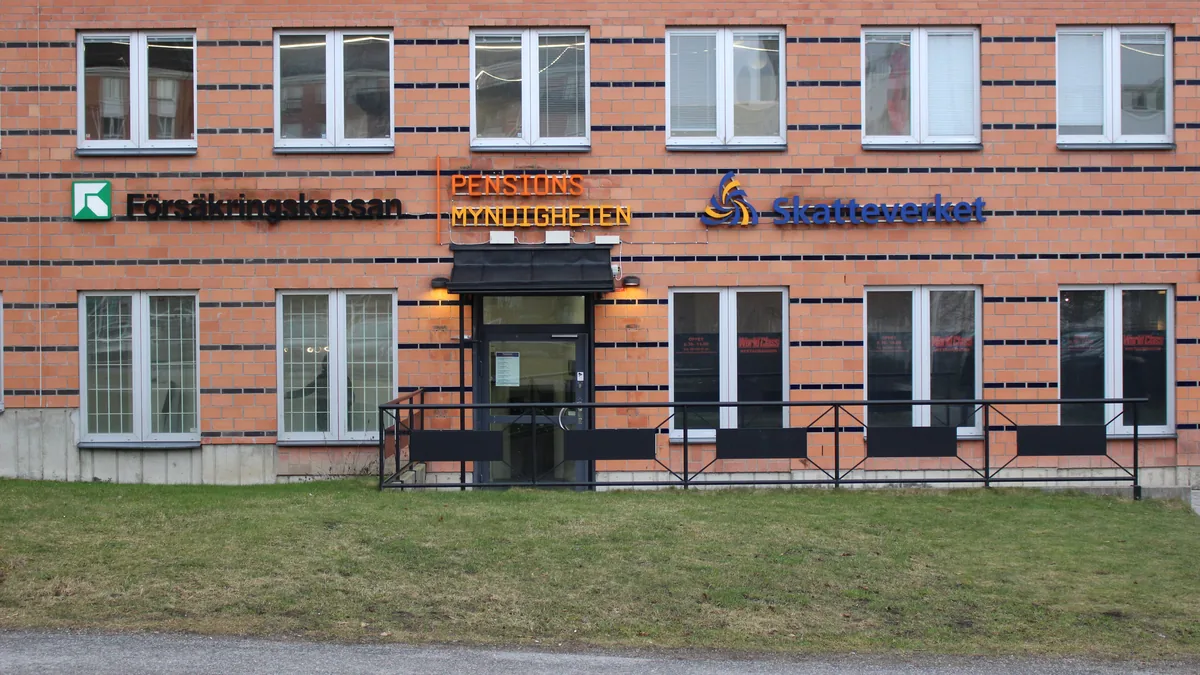
Photo: Wikimedia Commons / Kista Science City Commercial Hub (CC BY-SA)