 Sunil Rao
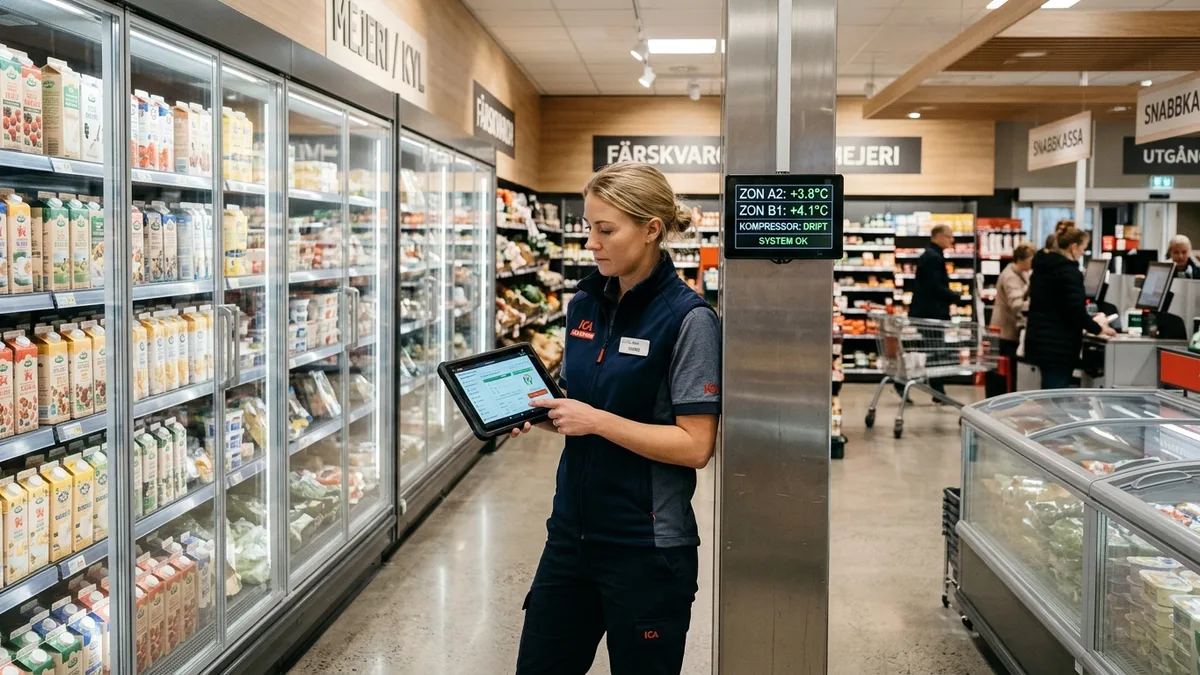
When a cyberattack hits a hyper-digitalized society like Sweden, the target is no longer just government websites or corporate email servers - it is the supermarket freezer aisle and the neighborhood payment terminal. On 9 and 10 November 2026, Minister for Civil Defense (minister för civilt försvar) Carl-Oskar Bohlin held a high-profile security press briefing at the Ministry of Defense (Försvarsdepartementet) following early-November cyberattacks that disrupted network-connected refrigeration and freezer systems in Swedish grocery stores.
Addressing reporters, Bohlin warned that Russia has become markedly more risk-tolerant in conducting hybrid warfare and cyber sabotage across Europe, and that Swedish residents, municipalities, and businesses must prepare for a higher frequency of cyber incidents aimed at critical civilian infrastructure and everyday societal functions.
For expats and international families living in Sweden - where more than 90 percent of retail purchases are normally paid digitally via Swish or contactless cards and where building heating, supermarket cooling, and public transport rely on cloud-connected control systems - the November 2026 briefing is an important wake-up call. Below is our complete guide to what happened, why operational technology (OT) in retail and housing is being targeted, and the exact financial and household preparedness steps recommended by the Riksbank and MSB.
1. Inside the November 2026 Cyber Briefing: Why Grocery Store Cooling Systems Were Hit
Why would hackers target the refrigeration and freezer monitoring units inside Swedish supermarkets? As Minister for Civil Defense Carl-Oskar Bohlin and Sweden's National Cyber Security Centre (Nationellt cybersäkerhetscenter, NCSC) highlighted on 9-10 November 2026, modern hybrid warfare focuses on two simultaneous goals: causing immediate economic disruption and eroding public psychological confidence in everyday supply chains.
The early-November 2026 incidents exposed a vulnerability that affects thousands of commercial buildings, grocery stores, and apartment complexes across Sweden:
- Operational Technology (OT) & Building Management Systems: Modern supermarkets rely on networked Industrial Control Systems (ICS) and SCADA controllers to maintain strict cold-chain temperatures (+2 to +4 degrees Celsius for chilled foods and -18 degrees Celsius for frozen goods) and to report energy efficiency data to remote maintenance contractors. When attackers compromise a third-party IT supplier or exploit an unpatched remote-access gateway, they can trigger false temperature alarms, shut down compressors, or lock store managers out of climate controls.
- Strict Swedish Food Safety Spoilage Rules (Livsmedelsverket): Under Swedish Food Agency (Livsmedelsverket) regulations, if a supermarket's chilled or frozen cabinets lose temperature control beyond statutory time limits during a cyber lockout, the store is legally required to discard hundreds of thousands of kronor worth of meat, dairy, fish, and frozen goods even if power to the building itself remains on.
- Heightened Russian Risk Appetite Ahead of Winter 2026/2027: In his 9-10 November briefing, Carl-Oskar Bohlin emphasized that Russian state-linked actors and criminal proxy groups are showing a higher willingness to take operational risks against NATO member states, coinciding with the Swedish Government's decision on 5 November 2026 to extend internal Schengen border controls until 11 May 2027 and Prime Minister Ulf Kristersson's 10 November Nordic-Ukrainian defense summit in Denmark.
2. Official Swedish Household Preparedness Standards (2026-2027)
In response to the deteriorating cyber and security environment, three Swedish authorities - the Swedish Civil Contingencies Agency (Myndigheten för samhällsskydd och beredskap, MSB), Sveriges Riksbank, and the National Food Agency (Livsmedelsverket) - have established concrete numerical benchmarks for every resident household in Sweden:
| Preparedness Domain | Official Statutory / Agency Benchmark | Responsible Authority | Practical Action for Expats & Residents |
|---|---|---|---|
| Emergency Home Cash Reserve (Krigskassa) | 1,000 SEK per adult (in small denominations: 20, 50, 100, 200 SEK notes) | Sveriges Riksbank (2026 Payment Report) | Withdraw from Bankomat ATM and store safely at home for offline grocery/fuel use |
| Physical Bank & Credit Cards | At least 2 physical chip-and-PIN cards on different networks (Visa + Mastercard) | Sveriges Riksbank & Finansinspektionen | Offline card terminals require physical EMV chip insertion + PIN (not Apple/Google Pay) |
| Digital ID Redundancy (E-legitimation) | Primary Mobile BankID + secondary e-ID (Freja eID+ or Police State e-ID from 1 Dec 2026) | DIGG & Polismyndigheten | Allows login to 1177, Skatteverket, and Försäkringskassan if BankID suffers a DDoS attack |
| Self-Sufficiency Duration (Hemberedskap) | Minimum 7 days (168 hours) without external power, water, or store trips | MSB (Om krisen eller kriget kommer) | Stock 7 days of shelf-stable food, water containers, camping stove, and power banks |
| Drinking Water Storage | 3 to 5 liters per person per day (21-35 liters per adult for 7 days) | Livsmedelsverket & MSB | Keep clean food-grade jerrycans (vattendunkar) ready to fill if municipal pumps lose power |
| Prescription Medication Buffer | 1 month reserve of critical daily prescription drugs | Socialstyrelsen & Läkemedelsverket | Refill within the 3,800 SEK annual high-cost cap window before stock runs low |
3. How Offline Card Payments and Digital ID Backup Work During a Swedish Cyber Outage
Under Sweden's updated civil preparedness framework for the financial sector, major banks and grocery chains operate specific fallback protocols when internet connectivity between a store checkout and the central bank clearing system is severed by a cyberattack:
- Why Physical Chip-and-PIN Works When Contactless Mobile Wallets Fail: When a supermarket checkout terminal switches to "offline mode" (offline-betalning), the terminal relies on cryptographic risk parameters stored directly on the physical EMV chip inside your plastic debit or credit card. Smartphone wallets (Apple Pay, Google Pay, Samsung Pay) and Swish require real-time online tokenization or server verification and are rejected by offline terminals. Always carry your physical plastic card and know your four-digit PIN.
- The 1,000 SEK Per Adult Cash Baseline: In early 2026, Sveriges Riksbank formalized its recommendation that every adult keep roughly 1,000 SEK in physical Swedish banknotes at home. Note that you should avoid keeping 500 SEK or 1,000 SEK bills for emergency use: if electronic tills are disrupted, supermarkets quickly run out of change and may only accept exact cash amounts in 20, 50, 100, and 200 SEK denominations.
- Setting Up a Backup Digital ID Before 1 December 2026: Sweden's dependence on a single private digital identity system - BankID - has repeatedly allowed DDoS attackers to disrupt logins to banks, pharmacies, and government portals simultaneously. Residents with a Swedish personal identity number (personnummer) can activate Freja eID+ for free on their smartphone today, and starting 1 December 2026, the Swedish Police Authority (Polismyndigheten) is launching Sweden's new State e-ID (statlig e-legitimation) stored on national ID cards and passports under Act (2026:1358).
2026-2027 Household Case Study: Building a 7-Day Civil Defense & Payment Buffer for a Family of Four in Malmö
Consider Ananya and Marcus, an expat couple living in a three-bedroom apartment in Malmö with two school-age children. How much does it actually cost in kronor to make their household compliant with the Riksbank and MSB preparedness rules highlighted after the November 2026 cyber briefing?
- 1. Riksbank Emergency Cash Reserve (2,000 SEK Liquid Asset - 0 SEK Net Cost): Because there are two adults in the household, Ananya and Marcus withdraw 2,000 SEK in total (1,000 SEK per adult) from a Bankomat ATM, broken down into ten 100 SEK notes and twenty 50 SEK notes. Because this cash remains their own money stored in a fireproof home document pouch alongside their passports and physical residence permit cards, the net expense is 0 SEK (aside from ~40 SEK/year in foregone savings interest).
- 2. Payment & E-ID Redundancy (0 SEK Cost): Previously, both partners used a single joint bank's Visa debit card loaded into Apple Pay. They add a free no-annual-fee Mastercard from a second independent Swedish bank, put the physical plastic cards in their wallets, and activate free Freja eID+ alongside Mobile BankID so they can still access 1177 and pharmacy prescriptions if one bank's IT infrastructure is hit by a cyberattack.
- 3. MSB 7-Day Food, Water & Power Kit (~1,850 SEK One-Time Equipment Cost):
- Two 15-liter foldable BPA-free water jerrycans (vattendunkar) at Clas Ohlson or Biltema: 240 SEK.
- Crank/solar emergency FM radio with built-in LED flashlight and USB phone charger (vevradio) tuned to P4 Malmöhus (102.0 MHz): 490 SEK.
- Portable alcohol/gas camping stove (stormkök / Trangiakök) plus 2 liters of stove fuel (röd etanol) for cooking on the balcony if district power fails: 720 SEK.
- High-capacity 20,000 mAh USB-C power bank kept charged at 80-100%: 400 SEK.
- Rotating 7-day pantry of normal shelf-stable groceries (oats, pasta, rice, canned beans, crushed tomatoes, nut butter, UHT milk, and coffee) integrated into their normal monthly food budget: 0 SEK wasted because items are rotated before expiry.
4. Warning for Housing Associations (Bostadsrättsföreningar) & Small Businesses
Minister Carl-Oskar Bohlin's 9-10 November 2026 cyber briefing also carries a direct message for expats who serve on the board of their local apartment housing association (bostadsrättsförening, BRF) or run a small business in Sweden. Just like supermarket refrigeration units, most Swedish apartment buildings use internet-connected control units (styrsystem / fastighetsautomation) to regulate district heating (fjärrvärme) substations, exhaust-air heat pumps, elevator alarms, and digital entry fobs (passersystem).
If you sit on a BRF board or manage a company facility in Sweden, ask your property management firm (teknisk förvaltare) three questions this month: (1) Is our building's heating and entry control system directly exposed to the public internet without a VPN and multi-factor authentication? (2) Have default factory passwords on our heat-pump or ventilation controllers been changed? and (3) Do residents have a mechanical key fallback to enter the building entrance door if the digital tag reader or power supply fails during a winter outage?
Sources
- Government Offices of Sweden (Regeringskansliet / Försvarsdepartementet) - Press Briefing on Cyberattacks by Minister for Civil Defense Carl-Oskar Bohlin (Pressbriefing om cyberattacker, 9-10 November 2026)
- Swedish Civil Contingencies Agency (MSB) - Official 7-Day Household Preparedness Guide (Hemberedskap - preppa för minst en vecka)
- Sveriges Riksbank - Payment Preparedness for Households: Keep 1,000 SEK in Cash and Multiple Physical Cards
- National Cyber Security Centre (Nationellt cybersäkerhetscenter, NCSC) - Cyber Security Advisories for Operational Technology (OT) and Industrial Control Systems
Related articles
Frequently asked questions
Why did Minister for Civil Defense Carl-Oskar Bohlin hold a press briefing on cyberattacks in November 2026?
On 9-10 November 2026, Minister for Civil Defense Carl-Oskar Bohlin held a press briefing at the Ministry of Defense (Försvarsdepartementet) following a series of cyberattacks in early November 2026 that targeted Industrial Control Systems (ICS) governing cooling and freezer units in Swedish grocery stores. Bohlin warned that Russian state-aligned and proxy actors have become more risk-tolerant in conducting hybrid operations against NATO allies and that Sweden must expect further cyber disruptions targeting everyday civilian infrastructure.
How much emergency physical cash (krigskassa) does Sveriges Riksbank recommend keeping at home in 2026?
In its 2026 household payments readiness guidance, Sveriges Riksbank officially recommends that every adult in Sweden keep at least 1,000 SEK in physical banknotes (preferably in smaller denominations such as 20, 50, 100, and 200 SEK notes) at home as an emergency cash reserve (krigskassa) to cover roughly one week of essential food, medicine, and fuel if Swish, BankID, or card networks suffer a prolonged cyber outage.
What happens if BankID or Swish goes down during a Swedish grocery store checkout?
If a DDoS or ransomware attack temporarily disables Swish or Mobile BankID, you cannot pay via Swish or authenticate online bank transfers. For this reason, the Riksbank and the Swedish Civil Contingencies Agency (MSB) advise every resident to carry at least two physical chip-and-PIN bank cards from different card networks (for example, one Visa and one Mastercard issued by two separate banks), because physical chip-and-PIN cards support limited offline transactions for essential food and pharmacy purchases.
How long should a household in Sweden be able to manage without external electricity, water, or grocery deliveries?
Under MSB's national civil preparedness standard (Om krisen eller kriget kommer / In case of crisis or war), every healthy household in Sweden is expected to be self-sufficient (hemberedskap) for at least 7 days (one full week) with shelf-stable food, drinking water (at least 3 to 5 liters per person per day stored in clean containers), alternative heating, a battery or crank-powered FM radio tuned to Sveriges Radio P4, and essential prescription medicines.
Are Swedish supermarkets and pharmacies required to accept offline card payments or cash during a cyber incident?
Pharmacies are legally required to accept cash for prescription medicines covered by Sweden's high-cost protection scheme (högkostnadsskydd), and major grocery chains (ICA, Coop, Axfood/Willys/Hemköp, and Lidl) maintain cash-handling lanes as well as offline EMV chip-and-PIN fallback protocols established in cooperation with the Riksbank's Civil Preparedness Council for Payments.
What should Swedish companies and IT administrators do after the November 2026 operational technology (OT) attacks?
The National Cyber Security Centre (Nationellt cybersäkerhetscenter, NCSC) and CERT-SE urge all Swedish businesses and housing associations (BRFs) to immediately audit internet-exposed building management, HVAC, heat-pump, and refrigeration control systems, enforce multi-factor authentication (MFA) on all remote vendor maintenance portals, and isolate operational technology (OT) from public networks.
Estimate only. Talk to a qualified adviser before acting on anything here.
Photo: Simon Paulin / imagebank.sweden.se