 Sunil Rao
In Sweden, fewer than 1 in 10 retail store purchases are made with physical cash, and millions of residents leave home every morning carrying nothing more than a smartphone loaded with Swish and Apple Pay or Google Pay. While that frictionless digital ecosystem is extraordinarily convenient in normal times, it creates a critical vulnerability if fiber-optic networks, mobile telecom towers, or banking IT infrastructure suffer a severe outage or cyberattack.
To close that civil-defense vulnerability, Sweden's central bank (Sveriges Riksbank) - working in close coordination with Swedish commercial banks, card networks Visa and Mastercard, payment terminal acquirers, and the Swedish Trade Federation (Svensk Handel) - has rolled out an expanded nationwide framework for Offline Card Payments (Offlinebetalningar med kort) that took effect on 1 July 2026 and is being actively integrated across essential retailers this autumn.
For expats and international professionals living in Sweden - particularly those who rely heavily on smartphone wallets or foreign neobank cards like Revolut or Wise - understanding how Sweden's emergency offline payment system actually works is essential. If you only carry your phone or an "online-only" fintech card during a communications blackout, you will be unable to buy groceries, baby formula, prescription medicine, or fuel. Here is our complete technical and practical guide to Riksbanken's 2026 offline payment rules.
1. Why Riksbanken Expanded Offline Card Payments in 2026
Under the Riksbank Act (Lagen 2022:1568 om Sveriges riksbank), Sweden's central bank carries a statutory mandate not only to maintain price stability, but also to ensure that the public can make payments safely and efficiently even during peacetime crisis situations (fredstida krissituationer) and heightened state of alert (höjd beredskap).
Historically, when a store payment terminal lost internet connectivity to the card acquirer and the customer's bank, offline functionality was extremely limited, inconsistent across banks, and often rejected by modern contactless terminals. At the same time, Sweden's dominant instant-payment app Swish requires 100 percent real-time online connectivity between your mobile phone, the BankID authentication servers, the central Swish server, and Riksbanken's real-time settlement system (BiR). If any link in that chain goes dark, Swish stops working instantly.
Under the new framework implemented from 1 July 2026, Riksbanken and the Swedish payments industry have standardized and expanded offline card authorization rules across the entire supply chain so that households can continue purchasing life-essential goods (livsnödvändiga varor) when data networks fail.
| Payment Method | Works During Internet / Server Outage? | 2026 Riksbanken Rules & Limitations |
|---|---|---|
| Physical Swedish Bank Card (Chip + PIN) | YES (Primary Offline Method) | Insert physical EMV chip into terminal and enter 4-digit PIN at essential stores |
| Contactless Card Tap (Blipp) | Severely Limited / No | Disabled or restricted offline; always insert the physical chip and type your PIN |
| Apple Pay / Google Pay (Phone/Watch) | Unreliable / Often Fails Offline | Many banks block offline tokenized wallet transactions or enforce strict low caps |
| Swish (Mobile Instant Payment) | NO (0% Offline Capability) | Requires live internet connection to BankID and real-time bank settlement servers |
| Prepaid / Virtual / Neobank Cards | Usually NO (Online-Only) | Cards coded with EMV Service Code 221/621 require live online balance checks |
| Physical Swedish Banknotes (Kontanter) | YES (Provided Store Has Power) | Recommended 1-week reserve in small denominations (20, 50, 100, 200 SEK) |
2. How Offline Chip-and-PIN Authorization Works Under the Hood
How can a supermarket checkout terminal approve your debit or credit card purchase if the store has zero internet connection to check your bank account balance?
The secret lies inside the physical gold or silver EMV microprocessor chip embedded in your plastic bank card. Unlike a magnetic stripe or a simple QR code, the EMV chip is a secure cryptographic microcomputer programmed by your issuing Swedish bank whenever you make normal online transactions or ATM withdrawals.
Under the expanded 2026 Riksbanken offline protocol, here is what happens step by step when an outage strikes:
- Insert Card & Enter PIN: You insert your physical card into the store terminal's chip slot and type your 4-digit PIN. The terminal verifies your PIN directly against the encrypted key stored on the card's chip (Offline PIN Verification) and authenticates that the card is genuine using public-key cryptography (Combined Data Authentication - CDA) without needing any internet connection.
- Checking the Card's Internal Offline Counter: Inside your card's EMV chip are pre-programmed risk parameters set by your bank: a maximum cumulative offline spending amount (Cumulative Offline Transaction Amount Limit) and a maximum number of consecutive offline purchases (Consecutive Offline Transaction Counter).
- Local Terminal Approval & Deferred Settlement: As long as your purchase at the grocery store, pharmacy, or fuel pump is within the card's offline allowance and the merchant terminal's offline floor limit, the chip approves the transaction locally and increments its internal offline counter. The store terminal stores the encrypted transaction receipt in its local memory and uploads it for bank settlement once internet connectivity returns.
- Automatic Reset on Next Online Purchase: The moment networks are restored and you make a normal online chip-and-PIN purchase (or use an ATM), your bank's server resets your card's internal offline counter back to full capacity.
3. The Expat Trap: Why Smartphones and Fintech Cards Fail in an Outage
International residents and expats in Sweden are disproportionately exposed to payment lockouts during a technical disruption for three specific reasons:
Trap 1: Leaving Your Physical Wallet at Home
Because Sweden allows digital driver's licenses inside specific apps and almost universal contactless acceptance, many residents in Stockholm, Gothenburg, and Malmö never carry a physical plastic card. During a major telecom or payment-processor outage (such as the Nets or BankID disruptions experienced in recent years), stores switch their terminals to Physical Chip + PIN Only mode. If you only have your iPhone or Apple Watch in your pocket, you will have to leave your shopping basket at the checkout.
Trap 2: Relying on Foreign Neobank or Prepaid Cards (Service Code 221)
Many newly arrived expats use international multi-currency cards (such as basic prepaid tiers of Revolut, Wise, or N26) or basic "Maestro / Visa Electron / Mastercard Maestro-equivalent" accounts before obtaining a full Swedish bank card. Most fintech debit cards are programmed by their issuers as "Online Authorization Mandatory" (EMV Service Code `221` or `621`) because the fintech provider wants to verify your exact real-time balance on every single swipe to prevent overdrafts. An online-only card is mathematically incapable of approving an offline chip transaction during a network blackout.
Trap 3: Forgetting Your Physical Card's 4-Digit PIN
When you pay with Apple Pay or Google Pay for months on end using FaceID or TouchID, you never type your physical card's 4-digit PIN code. In an offline emergency, FaceID cannot unlock the plastic card's EMV chip - you must type the actual 4-digit card PIN on the terminal keypad. If you enter the wrong PIN three times in a row, the EMV chip locks itself permanently until the card is connected to an online terminal or replaced.
Real-World Case Study: A 48-Hour Regional Fiber & BankID Outage
The Scenario: On a Tuesday evening in November, a severe storm combined with a core routing failure knocks out mobile data and payment-clearing links across parts of Mälardalen for 36 hours. Supermarket checkout screens display a notice: "Endast fysiskt kort med chip och kod eller kontanter - Swish och mobila plånböcker fungerar ej." (Physical chip-and-PIN card or cash only - Swish and mobile wallets not working.)
How Two Expat Households Fare:
- Household A (Unprepared): Alex goes to ICA with only his iPhone (Apple Pay + Swish) and a virtual-only neobank card. Neither Swish nor Apple Pay can complete offline chip authentication. Alex cannot buy groceries or pharmacy fever medication for his child until a neighbor lends him physical cash.
- Household B (Following Riksbanken's 2026 Protocol): Maya carries her physical Handelsbanken Visa debit card and her partner's SEB Mastercard credit card in a slim cardholder, has verified both 4-digit PINs in her banking app, and keeps 1,500 SEK in 50 and 100 SEK banknotes in a home safe. At ICA and Apoteket, she inserts her physical Visa card into the chip reader, enters her PIN, and completes her essential purchases smoothly via Riksbanken's 2026 offline clearing system.
4. Riksbanken's 4-Point Payment Preparedness Checklist for Every Household
To ensure your household is protected under Sweden's 2026 civil preparedness guidelines, Riksbanken and the Swedish Civil Contingencies Agency (MSB / Myndigheten för civilt försvar) advise every adult resident to maintain four layers of payment redundancy:
- Carry At Least One Physical Chip-and-PIN Card Every Day: Never rely 100 percent on your phone. Keep a physical Visa or Mastercard issued by a full-service bank in your pocket or bag, and log into your banking app today to make sure you remember its 4-digit PIN.
- Hold Cards from Two Different Networks and Banks: If a technical outage hits a single issuing bank (e.g., Swedbank) or a single card network (e.g., Visa), having a backup card from a second bank on the other network (e.g., a Mastercard credit card from SEB, Nordea, or Morrow/Norwegian) ensures you can still pay.
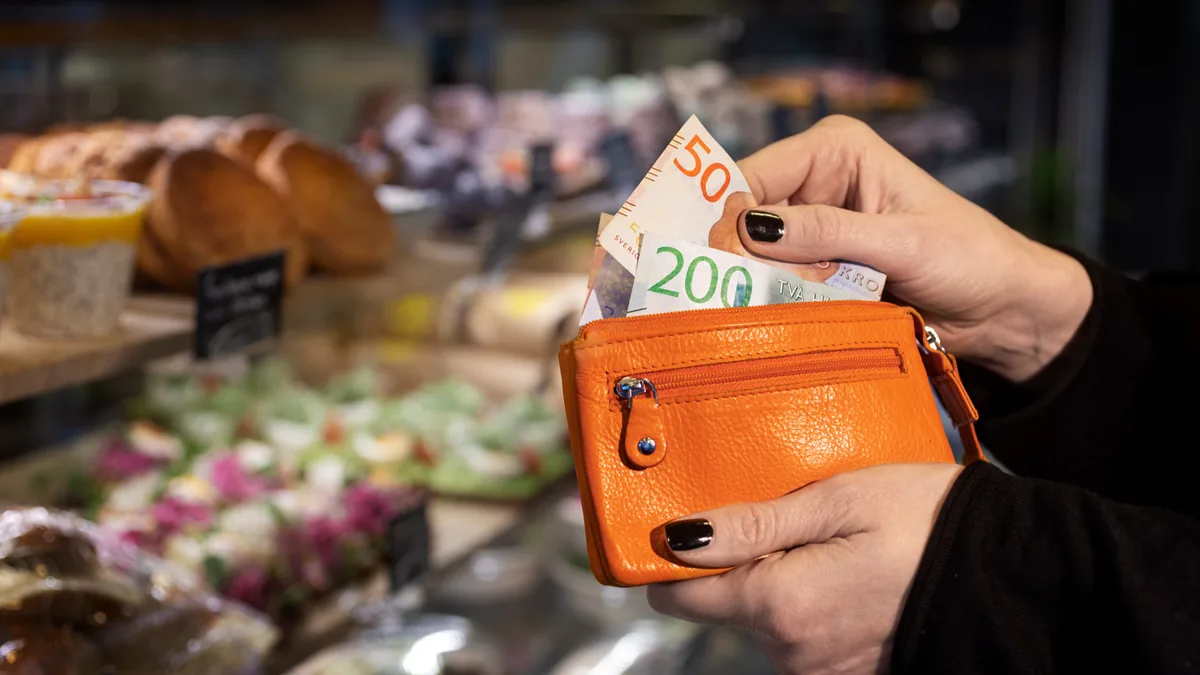
- Keep One Week of Physical Cash (Kontanter) in Small Denominations: Even with the 1 July 2026 offline card expansion, offline card payments still require the store terminal to have electrical power and functioning software. Keep enough valid Swedish banknotes (20, 50, 100, and 200 SEK notes - avoid only holding 500 SEK bills so cashiers can make change) at home to cover 7 days of food, medicine, and fuel. (And remember: if you have any older invalid pre-2016 banknotes at home, redeem them with Riksbanken before the permanent 1 July 2027 cutoff!)
- Maintain Access to Two Instant Payment / E-ID Methods: Alongside Mobile BankID and Swish, consider activating a physical bank security token (säkerhetsdosa) or Freja eID+ so a single app outage never locks you out of your online banking or digital government portals.
The NordDaily Action Plan: Riksbanken's 2026 expansion of offline card payments is a major step forward for Sweden's cashless resilience, but it only works if you carry the right physical hardware. Take five minutes today to: (1) put your physical Swedish bank card back into your everyday cardholder, (2) verify your 4-digit PIN inside your bank's mobile app, and (3) withdraw 1,000 to 2,000 SEK in 100 and 200 SEK banknotes from a Bankomat for your home emergency kit. To calculate how much your household spends on essential weekly groceries, utilities, and pharmacy items to size your emergency reserve accurately, use our interactive Sweden Monthly Cost of Living & Emergency Buffer Calculator.
Official Sources & Statutory References
- Sveriges Riksbank Official Press Release (2026): Offlinebetalningar med kort - nu utökas möjligheterna (Sveriges Riksbank)
- Sveriges Riksbank Payment Preparedness Guide: Så kan du betala i kris - Riksbankens råd till allmänheten
- Sveriges Riksbank Act (Lag 2022:1568 om Sveriges riksbank): Chapter 3 (Betalningssystemet och kontantförsörjning i fredstida krissituationer) - Sveriges Riksdag
Related articles
Frequently asked questions
What is Riksbanken's new offline card payment system in Sweden?
Implemented from 1 July 2026 through an industry-wide agreement led by Sveriges Riksbank alongside Swedish banks, Visa, Mastercard, payment terminal acquirers, and the Swedish Trade Federation (Svensk Handel), the expanded offline card payment framework allows consumers to pay for essential goods (food, medicine, and motor fuel) using a physical payment card's chip and PIN even when internet connectivity or central bank servers are down.
Do Apple Pay, Google Pay, or Swish work when payment terminals are offline?
Swish does not work at all during internet or bank server outages because it requires real-time clearing via BankID and the BiR settlement system. Mobile wallets like Apple Pay and Google Pay have severe limitations offline and frequently fail or hit strict transaction counters unless the terminal and issuing bank support specific offline token rules. Riksbanken therefore explicitly advises all residents to carry a physical debit or credit card with an active chip and memorized PIN.
Which stores and sectors in Sweden support offline card payments?
The expanded offline payment framework focuses on life-essential retail sectors (livsnödvändiga varor): grocery supermarkets (livsmedelshandel such as ICA, Coop, Hemköp, Willys, and Lidl), pharmacies (apotek), and fuel/charging stations (drivmedel). Luxury retail, restaurants, and online e-commerce are not covered by emergency offline clearing guarantees.
How do I pay with my card during an offline outage in a Swedish supermarket?
During an offline disruption, contactless 'tap' (blipp) is either disabled or heavily restricted. Instead, you must physically insert your plastic card into the terminal's chip reader and enter your 4-digit PIN code. The encrypted EMV chip on your card communicates directly with the store terminal to authorize the purchase within pre-set offline spending limits, and the transaction is settled later once internet connectivity is restored.
Do all bank cards in Sweden work for offline chip-and-PIN payments?
Standard physical Visa and Mastercard debit and credit cards issued by major Swedish banks (such as Swedbank, Handelsbanken, SEB, Nordea, Danske Bank, Länsförsäkringar, Skandia, and ICA Banken) support EMV offline chip-and-PIN authorization up to the issuer's offline risk limit. However, many foreign fintech prepaid cards, youth cards, or virtual-only neobank cards require 100 percent online authorization (online-only cards) and will be declined during an internet outage.
How much physical cash does Riksbanken recommend keeping at home in Sweden?
Alongside holding at least two physical chip-and-PIN cards from different card networks (e.g., one Visa and one Mastercard), Riksbanken and the Swedish Civil Contingencies Agency (MSB / Myndigheten för civilt försvar) recommend that every household keep enough physical Swedish banknotes (sedlar) in small denominations (20, 50, 100, and 200 SEK notes) to cover at least one week of essential groceries, medicine, and fuel.
Estimate only. Talk to a qualified adviser before acting on anything here.
Photo: Sveriges Riksbank / Press