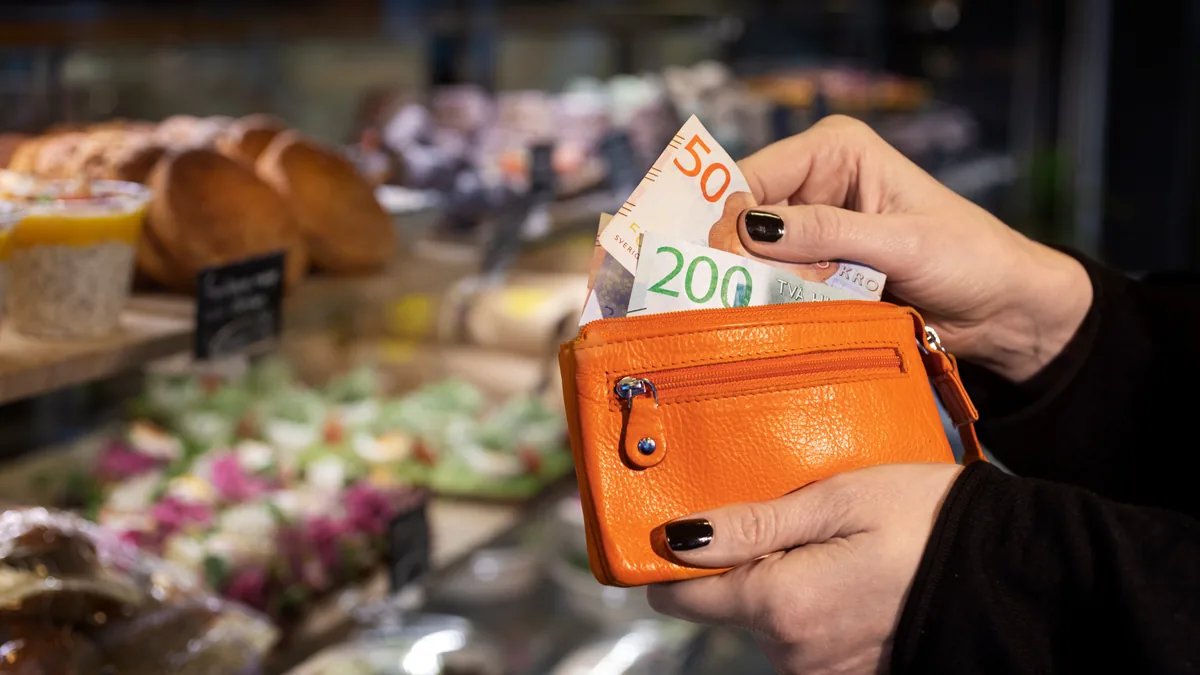
 Sunil Rao
On 8 October 2026, Sweden's central bank, Sveriges Riksbank, announced a definitive cut-off date for one of the country's longest-running financial transition services: starting 1 July 2027, the central bank will permanently cease redeeming banknotes that have been invalid for more than ten years.
The Riksbank estimates that older, invalid Swedish banknotes with a staggering total value of approximately 3.9 billion kronor (cirka 3,9 miljarder kronor) remain unredeemed. Across the country, these notes sit forgotten in drawers, attics, safety deposit boxes, family estates, and book collections. With the statutory window closing, holders have until 30 June 2027 to file a formal redemption claim before their cash loses all legal value and becomes permanent scrap paper.
However, reclaiming this money is neither automatic nor free. Every claim is subject to a 300 SEK administrative processing fee and a strict individual anti-money laundering (AML) audit. Claimants must provide verifiable paper trails demonstrating exactly where the money originated.
1. Why the Riksbank Is Ending Banknote Redemption Now
Between October 2015 and June 2017, Sweden carried out the largest currency changeover in modern Nordic history (sedel- och myntutbytet). The central bank replaced all circulating banknote denominations (20, 50, 100, 500, and 1,000 kronor) with newly designed, high-security versions featuring cultural luminaries such as Astrid Lindgren, Evert Taube, Greta Garbo, Ingmar Bergman, Birgit Nilsson, and Dag Hammarskjöld, while introducing a new 200 kronor denomination and lighter, nickel-free coins.
When the older notes lost their status as legal tender, the Riksbank retained a statutory discretionary service allowing the public to redeem invalid banknotes by post for an administrative fee. In its 8 October 2026 press release, the Riksbank noted that nearly ten years have elapsed since the changeover, making a permanent deadline both logical and necessary for two primary reasons:
- Evidentiary Decay Under AML Legislation: Under the Swedish Anti-Money Laundering Act (Lag 2017:630 om åtgärder mot penningtvätt och finansiering av terrorism), the Riksbank is legally prohibited from exchanging money without establishing its lawful origin. After a decade, banks are no longer obligated to store historic transaction archives, paper withdrawal receipts are routinely lost, and family estates are settled, making it exceedingly difficult for honest citizens to produce valid documentation.
- Escalating Public Administrative Costs: Processing individual manual applications, verifying physical notes with specialist forensic equipment, conducting individual AML background screenings, and executing secure banking disbursements creates considerable administrative costs that should not burden Swedish taxpayers indefinitely.
2. Which Swedish Banknotes Are Affected by the 2027 Deadline
The 1 July 2027 termination applies to all Swedish banknotes that became invalid during the 2015-2017 currency overhaul, as well as older historical banknote series that became invalid in earlier decades.
The two primary tranches from the major changeover include:
- Tranche 1 (Invalid since 30 June 2016): Older 20 kronor notes (Selma Lagerlöf), older 50 kronor notes (Jenny Lind), and older 1,000 kronor notes (Gustav Vasa without security thread, and newer version with foil strip). These notes completed their 10-year invalidity milestone on 30 June 2026.
- Tranche 2 (Invalid since 30 June 2017): Older 100 kronor notes (Carl von Linné) and older 500 kronor notes (Karl XI). These denominations reach their exact 10-year invalidity milestone on 30 June 2027.
| Denomination | Historical Motif | Invalidity Date | Redemption Cut-Off | Post-Deadline Legal Status |
|---|---|---|---|---|
| 20 SEK | Selma Lagerlöf (purple) | 30 June 2016 | 30 June 2027 | Worthless collector item (0 SEK) |
| 50 SEK | Jenny Lind (yellow) | 30 June 2016 | 30 June 2027 | Worthless collector item (0 SEK) |
| 100 SEK | Carl von Linné (blue) | 30 June 2017 | 30 June 2027 | Worthless collector item (0 SEK) |
| 500 SEK | Karl XI (red) | 30 June 2017 | 30 June 2027 | Worthless collector item (0 SEK) |
| 1,000 SEK | Gustav Vasa (yellow-brown) | 30 June 2016 | 30 June 2027 | Worthless collector item (0 SEK) |
| Older Series | Notes issued prior to 1980s | Prior to 2016 | 30 June 2027 | Worthless collector item (0 SEK) |
3. The Anti-Money Laundering (AML) Proof of Origin Hurdle
The single biggest obstacle applicants face when dealing with the Riksbank is proving the lawful origin of the cash (pengarnas ursprung). Because the Riksbank is a government agency governed by the Swedish Anti-Money Laundering Act, its compliance officers cannot approve an application simply because the physical banknotes are genuine.
Under Chapter 2 of the AML Act, the central bank must achieve sufficient customer due diligence (kundkännedom) to ensure that the redeemed cash does not represent the proceeds of criminal activity, undeclared income, tax evasion, or money laundering.
To satisfy the Riksbank's compliance officers, you must provide clear, contemporaneous documentary evidence. The following documents are considered gold standard evidence:
- Bank Withdrawal Statements (Kontoutdrag): Bank statements showing physical cash withdrawals corresponding in timeframe and amount to the cash submitted. Under the Swedish Bookkeeping Act (Bokföringslagen), banks generally store records for seven to ten years, meaning records for pre-2016 withdrawals are rapidly approaching automated deletion schedules.
- Estate Inventory Deeds (Bouppteckning): If the cash was found in a deceased parent's or grandparent's home, you must provide the registered estate inventory deed approved by Skatteverket showing that cash was officially listed as an estate asset, alongside the distribution deed (arvskifte).
- Asset Sale Receipts: Signed purchase agreements, bill of sales, or vehicle transfer documents proving that you sold personal property (e.g., a car, boat, or machinery) and received cash payment prior to the invalidity date.
- Formal Gift Deeds (Gåvobrev): A dated, signed gift deed stating that the cash was gifted to you, accompanied by documentation proving the donor's original lawful source of funds.
If an applicant states that the cash was accumulated through decades of home piggy-bank savings (madrasspengar) but cannot provide bank withdrawal receipts or income documentation, the Riksbank will routinely reject the application. If rejected, the Riksbank retains the 300 SEK fee, confiscates the invalid notes without compensation, or reports suspicious transactions to the Swedish Financial Intelligence Unit (Finanspolisen).
4. Step-by-Step Guide: How to Redeem Invalid Banknotes Before 1 July 2027
If you have found invalid Swedish banknotes in your home or inherited an estate, follow this official six-step procedure to file your claim:
- Complete the Application Form: Navigate to the Riksbank's official portal (riksbank.se / Att lösa in ogiltiga sedlar). You can either submit the application digitally using Swedish Mobile BankID or download and print the physical PDF form (Ansökan om inlösen av ogiltiga sedlar).
- Compile Your Source of Funds Dossier: Gather all relevant account statements, estate records, or receipts. If you are representing a deceased person's estate (dödsbo), attach the complete registered bouppteckning and signed power of attorney (fullmakt) from all surviving heirs.
- Package the Physical Banknotes Securely: Count the notes carefully and package them flat. Do not tape or staple banknotes together. If you filled out a paper form, place the signed original form inside the envelope alongside your evidentiary documents.
- Dispatch via Insured Registered Mail: Mail the package to the Riksbank's designated address in Stockholm:
Sveriges Riksbank
Inlösen av sedlar
103 37 Stockholm
Always use registered, insured mail (Rekommenderat brev med värde via PostNord). Standard unregistered letters carry no tracking or insurance if lost in transit. - Statutory Deadline Verification: The package and application must physically reach the Riksbank no later than 30 June 2027. Postmarks dated 30 June that arrive on 1 July will be rejected without exception.
- Case Processing & Payout: Riksbanken's compliance team conducts an individual assessment. Processing typically takes between four and eight weeks. If approved, the redemption sum minus the 300 SEK administrative fee is transferred directly to your nominated Swedish bank account, Bankgiro, or international IBAN.
5. The Financial Arithmetic: When Is It Worth Redeeming?
Because the Riksbank charges a fixed 300 SEK administrative fee per application, small amounts of cash are mathematically uneconomic to redeem.
Consider the net financial yield across common cash sums:
- A Single 100 SEK or 200 SEK Note: If you find a single old 100 kronor note, submitting it will result in an immediate net financial loss. The 300 SEK fee exceeds the face value, meaning the Riksbank will not issue any payment. These notes are better kept as historical souvenirs or donated to a numismatic collector.
- Small Amounts (500 SEK): After the 300 SEK deduction, your net payout is 200 SEK. Factoring in the cost of registered insured postage (approximately 100 SEK to 150 SEK via PostNord), your true net return is negligible (around 50 SEK to 100 SEK).
- Substantial Stashes (5,000 SEK to 50,000 SEK+): For larger amounts discovered in family homes or estates, the 300 SEK fee represents a tiny friction cost (less than 1% to 6% of capital), making formal redemption highly worthwhile.
Case Study: Resolving an Inherited Cache of 500-Kronor Notes
In November 2026, Sofia and her brother inherit their late grandmother's summer house in Småland. While clearing a locked bureau drawer, they discover 40 crisp red 500 kronor notes featuring King Karl XI, totaling 20,000 SEK in face value. The notes became invalid on 30 June 2017.
Knowing the 1 July 2027 cut-off is approaching, Sofia downloads the Riksbank application form. She contacts her grandmother's estate administrator and obtains a copy of the official estate inventory (bouppteckning) registered with Skatteverket, which documented that the grandmother had maintained historic cash reserves. Sofia also secures a written power of attorney (fullmakt) from her brother.
Sofia sends the 40 notes via PostNord Rekommenderat Värde along with the application and estate documentation. Six weeks later, the Riksbank's compliance unit approves the claim. The central bank deducts the 300 SEK administrative fee and deposits 19,700 SEK directly into the estate's bankgiro account. Had Sofia waited until 2 July 2027, the entire 20,000 SEK would have been permanently forfeited.
6. Non-Residents & International Expats: Redeeming from Abroad
Many former expats, tourists, and international citizens who worked or lived in Sweden during the 2000s and 2010s still hold invalid Swedish cash in overseas bank accounts or travel wallets.
International holders are fully eligible to apply for redemption under the same rules:
- Overseas Postal Dispatch: Packages sent from abroad must use international registered, declared-value post or secure couriers (e.g., DHL or FedEx) with tracking.
- International Wire Transfer (IBAN & BIC): On the application form, overseas residents can provide an international bank account number (IBAN) and BIC/SWIFT code. The Riksbank executes the payout in Swedish kronor, and your recipient bank converts the funds into your local currency (EUR, USD, GBP, etc.) at their prevailing exchange rates.
- Foreign Currency Exchange Offices (Forex, Travelex): Commercial exchange booths in European airports and city centers no longer accept invalid Swedish kronor. Only Sveriges Riksbank can legally process and redeem them.
7. The Broader Context: Sweden's Cashless Transformation
The fact that 3.9 billion kronor in invalid cash remains uncollected highlights Sweden's rapid transition into the world's premier cashless society. According to recent Riksbank payment surveys, less than 8% of recent consumer transactions in Swedish retail stores are conducted in physical cash. Most Swedish high-street bank branches (SEB, Swedbank, Handelsbanken, Nordea) are entirely cash-free (kontantlösa kontor) and no longer handle over-the-counter paper money.
While the Swedish government has introduced contingency preparedness initiatives (krisberedskap) mandating that grocery stores, fuel stations, and pharmacies maintain the capability to accept cash during national emergencies, day-to-day economic activity runs overwhelmingly on Swish, contactless cards, and digital BankID authentication.
NordDaily Action Plan: If you or your family have resided in Sweden, inherited property, or maintained cash reserves, conduct a thorough check of all physical storage, safety boxes, and estate archives immediately. If you locate invalid banknotes exceeding 500 SEK in value, gather bank statements or inheritance records now while bank archives are still accessible, and submit your registered mail claim to Sveriges Riksbank well ahead of the 30 June 2027 statutory deadline.
Official Legal Sources & Authorities
- Sveriges Riksbank Official Press Release (8 October 2026): Möjligheten att lösa in ogiltiga sedlar upphör 1 juli 2027
- Sveriges Riksbank Operational Guidelines: Att lösa in ogiltiga sedlar
- Lag (2022:1568) om Sveriges riksbank (The Central Bank Act)
- Lag (2017:630) om åtgärder mot penningtvätt och finansiering av terrorism (The Anti-Money Laundering Act)
Related articles
Frequently asked questions
What is the final deadline to redeem invalid Swedish banknotes?
Your redemption application and physical banknotes must arrive at Sveriges Riksbank no later than 30 June 2027. Starting 1 July 2027, the Riksbank will permanently stop accepting any banknotes that have been invalid for more than ten years.
How much does it cost to redeem invalid banknotes with the Riksbank?
The Riksbank charges a statutory administrative fee of 300 SEK per application if your request is approved. This fee is automatically deducted from the final payout deposited into your bank account.
What documentation is required to prove where the cash came from?
Under Sweden's Anti-Money Laundering Act (Penningtvättslagen), you must submit written evidence of the legitimate source of funds. Accepted documents include bank withdrawal slips, estate inventory deeds (bouppteckning), inheritance distribution agreements (arvskifte), sales contracts for personal property, or formal gift deeds (gåvobrev).
Can I redeem old Swedish coins that are no longer valid?
No. The Riksbank only redeems invalid banknotes. Invalid Swedish coins (such as older copper-nickel 1, 2, and 5 kronor coins) cannot be redeemed by the central bank and have zero financial value.
Can expats living abroad redeem invalid Swedish banknotes?
Yes, non-residents can submit applications from abroad. However, you must still provide full AML proof of funds documentation, mail the notes securely to the Riksbank in Stockholm, and provide an active IBAN and BIC account for the approved electronic transfer.
Estimate only. Talk to a qualified adviser before acting on anything here.
Photo: Sofia Sabel / imagebank.sweden.se