 Sunil Rao
On 20 October 2026, the Swedish Migration Agency (Migrationsverket) announced an upward revision to Sweden's 2026 refugee resettlement forecast, projecting that between 450 and 500 quota refugees (kvotflyktingar) can now be transferred to Sweden before the end of the calendar year.
The updated assessment comes less than two weeks after Migrationsverket initially warned on 7 October 2026 that only around 350 quota refugees would make it to Sweden before New Year's Eve due to a delayed policy directive from the Swedish Government. According to the agency's latest operational update, the ceiling was raised by up to 150 places after Migrationsverket decided to extract and resettle refugees currently in Rwanda under the UN Refugee Agency's (UNHCR) Emergency Transfer Mechanism.
Even with the late-autumn acceleration, however, Sweden will only fulfill roughly half of its statutory annual quota of 900 resettled refugees in 2026. Here is our detailed analysis of the 20 October 2026 announcement, the administrative bottleneck between Regeringskansliet and Migrationsverket, the specific demographic cohorts selected for 2026, and how municipal integration works once quota refugees land in Sweden.
1. Inside the 20 October 2026 Revision: Why the Forecast Jumped from 350 to 500
Every year, Sweden's Parliament (Riksdagen) and Government (Regeringen) allocate funding for Migrationsverket to resettle a fixed number of quota refugees directly from foreign refugee camps and transit hubs in cooperation with UNHCR. Under the Tidö coalition framework in place since 2023, Sweden's annual resettlement target (flyktingkvot) is set at 900 individuals per year, down from the 5,000-person annual quota maintained between 2017 and 2022.
To execute a resettlement program across multiple continents, Migrationsverket must first consult with the Ministry of Justice (Justitiedepartementet) on which nationalities, vulnerability profiles, and host countries should be prioritized. Once the Government delivers its formal political directive (inriktning), Migrationsverket's Director-General signs the operational resettlement order (vidarebosättningsprogram), allowing caseworkers to finalize security screenings, conduct in-person selection missions (uttagningsresor), issue residence permits, and book international flights with the International Organization for Migration (IOM).
On 7 October 2026, following months of waiting for the Government's reply, Migrationsverket estimated that only around 350 individuals could practically be transferred before 31 December 2026. By 20 October 2026, however, clearer operational conditions and the inclusion of pre-vetted UNHCR evacuees in Rwanda enabled the agency to raise its autumn target to between 450 and 500 people.
"The assessment is now that between 450 and 500 quota refugees can be received before the turn of the year. We have updated the assessment after making the decision to select refugees in Rwanda who are covered by UNHCR's so-called Emergency Transfer Mechanism."- Johan Norman, Head of Unit (enhetschef), Migrationsverket (20 October 2026)
2. The Administrative Timeline Bottleneck: Why 400 Quota Places Remain Unfilled
A central takeaway from both the 7 October and 20 October 2026 press statements is Migrationsverket's unusually candid explanation of why Sweden will fall 400 to 450 places short of its 900-person statutory quota in 2026.
According to Migrationsverket, the agency submitted its formal proposal for the 2026 resettlement program to the Government back in December 2025. Throughout the first three quarters of 2026, Migrationsverket repeatedly informed the Government that in order to vet, interview, clear, and physically transport all 900 refugees before 31 December 2026, the agency required a final Government decision no later than mid-September 2026.
While waiting for Cabinet sign-off during the spring and summer of 2026, Migrationsverket's resettlement unit performed preliminary desktop screening on case dossiers referred by UNHCR. However, the agency was legally barred from executing the decisive steps of the pipeline, such as locking in target countries, deploying selection teams abroad, finalizing SÄPO security clearances, and booking municipal housing placements, until the Government's directive arrived in early October.
| Resettlement Parameter | 7 October 2026 Initial Assessment | 20 October 2026 Updated Forecast |
|---|---|---|
| Statutory Annual Quota (Flyktingkvot) | 900 individuals per year | 900 individuals per year |
| Projected Transfers Before 31 Dec 2026 | Approximately 350 individuals | 450 to 500 individuals |
| Proposal Submitted to Government | December 2025 | December 2025 |
| Deadline Needed for Full 900 Transfer | Mid-September 2026 (missed) | Mid-September 2026 (missed) |
| Primary Selection Countries & Cohorts | Uganda (Congolese) & Turkey (Afghan women/girls) | Rwanda (UNHCR ETM), Uganda & Turkey |
| Gender & Vulnerability Mandate | ~67% women & girls; LGBTQI+ prioritized | ~67% women & girls; LGBTQI+ prioritized |
3. Who Qualifies in 2026? Rwanda ETM, Uganda, and Afghan Women in Turkey
Under the Government's 2026 directive and Migrationsverket's updated operational decision, Sweden's autumn 2026 resettlement missions are concentrated across three distinct geographic and humanitarian corridors:
Cohort A: The UNHCR Emergency Transfer Mechanism (ETM) in Rwanda
The catalyst behind the 20 October 2026 upward revision is Migrationsverket's decision to draw quota refugees from the UNHCR Emergency Transit Mechanism (ETM) in Rwanda. Established in 2019 through a tripartite agreement between the African Union, UNHCR, and the Government of Rwanda, the ETM facility in Gashora serves as an emergency life-saving evacuation hub for refugees and asylum seekers (predominantly from Eritrea, Sudan, Somalia, and Ethiopia) who were previously trapped in severe detention conditions in Libya.
Because individuals at the Rwanda ETM transit center have already undergone biometric registration, intensive UNHCR vulnerability documentation, and medical stabilization in a secure setting, Migrationsverket can process and transfer selected dossiers significantly faster than from remote border camps, allowing an extra 100 to 150 refugees to reach Sweden before the end of December 2026.
Cohort B: Congolese Refugees in Uganda
Uganda currently hosts over 1.6 million refugees, making it Africa's largest refugee-hosting nation, with hundreds of thousands of displaced citizens from the Democratic Republic of the Congo (DRC) fleeing protracted armed conflict in North Kivu and Ituri provinces. Congolese families and vulnerable survivors in Ugandan settlements form one of the core pillars of Sweden's 2026 selection quota.
Cohort C: Afghan Women and Girls in Turkey
Following the systematic dismantling of women's fundamental rights to education, work, and freedom of movement in Afghanistan, the Swedish Government mandated a strict gender rule for the 2026 Afghan resettlement allocation: the Afghan selection cohort in Turkey consists 100 percent exclusively of women and girls.
Cross-Cutting Demographic Quotas: Two-Thirds Women & LGBTQI+ Priority
Across all selection countries combined in 2026, the Government's directive instructs Migrationsverket to enforce two overarching demographic priorities:
- Two-Thirds Female Quota: Approximately two-thirds (around 67 percent) of all quota refugees transferred to Sweden in 2026 must be women and girls.
- LGBTQI+ Protection Priority: Persecuted LGBTQI+ refugees (hbtqi-personer) facing criminalization or life-threatening violence in their countries of origin or first-asylum transit states are prioritized across all regional cohorts.
4. How Sweden's Quota Refugee Pipeline Works from UNHCR Referral to Municipal Arrival
For international observers, municipal civil servants, and residents in Sweden, it is important to distinguish the legal and logistical pathway of a quota refugee (kvotflykting) under Chapter 5, Section 2 of the Swedish Aliens Act (Utlänningslagen 2005:716) from that of a spontaneous asylum seeker (asylsökande).
- UNHCR Identification & Referral: A refugee cannot apply directly to Sweden for quota resettlement. Instead, UNHCR field offices in first-asylum countries identify refugees who have neither the possibility of safe voluntary repatriation nor local integration in their host country, and submit formal resettlement dossiers to Migrationsverket.
- Adjudication & Security Screening: Migrationsverket's Resettlement Unit examines the UNHCR dossier, conducts either in-person selection interviews on field missions (uttagningsresor) or dossier-based assessments, and performs mandatory national security checks in consultation with the Swedish Security Service (Säkerhetspolisen - SÄPO).
- Residence Permit Granted Before Departure: Unlike asylum seekers at the border, accepted quota refugees receive their formal Swedish residence permit decision (uppehållstillstånd) and refugee status declaration (flyktingstatusförklaring) while still abroad.
- Municipal Matching Under the Settlement Act (Bosättningslagen): Before the refugee boards a flight to Sweden, Migrationsverket assigns them directly to one of Sweden's 290 municipalities using county-level annual reception quotas (kommuntal) governed by the Settlement Act (Lag 2016:38 om mottagande av vissa nyanlända invandrare för bosättning).
- Travel & Direct Municipal Reception: IOM arranges travel documents, pre-departure cultural orientation, and flights to Sweden. Upon landing at Arlanda or Landvetter, the quota refugee bypasses Migrationsverket's asylum reception camps (anläggningsboende - ABO) entirely and travels directly to housing arranged by their assigned municipality.
Real-World Case Study: Municipal Onboarding & the Two-Year Introduction Program
The Scenario: In November 2026, Amina (31) and her 9-year-old daughter arrive at Stockholm Arlanda Airport under Sweden's 2026 quota program for Afghan women and girls resettled from Turkey. Migrationsverket has pre-assigned them to Linköping Municipality under the 2026 municipal allocation numbers (kommuntal).
Step-by-Step Administrative Onboarding Upon Arrival:
- Day 1 Housing & Municipal Reception: Municipal integration coordinators meet Amina and her daughter upon arrival in Linköping and check them into a pre-arranged municipal apartment, completely avoiding the months or years spent in institutional asylum housing (LMA).
- Week 1 Skatteverket Registration (Folkbokföring): Because Amina already holds a valid residence permit decision granted prior to travel, she visits the Swedish Tax Agency Service Center (Statens servicecenter) in her first week to complete biometric capture for her residence permit card (UT-kort) and apply for population registration (folkbokföring). Within two to three weeks, both receive their 10-digit Swedish personal identity numbers (personnummer) and become eligible for a Swedish ID card and BankID.
- Month 1 Arbetsförmedlingen Establishment Plan (Etableringsprogrammet): Once registered in the population register, Amina enrolls in the Swedish Public Employment Service's (Arbetsförmedlingen) 24-month Introduction Program (etableringsprogrammet). Her full-time individualized plan combines Swedish for Immigrants (SFI), civic orientation (samhällsorientering), and vocational validation.
- Financial Support via Försäkringskassan: Instead of the low LMA daily allowance (61-71 SEK/day) paid to waiting asylum seekers, Amina qualifies for the full statutory Introduction Benefit (etableringsersättning, 308 SEK per day, five days a week) plus an Introduction Supplement (etableringstillägg) for her child and Swedish Child Allowance (barnbidrag, 1,250 SEK/month), all administered by Försäkringskassan.
5. How the 2026 Quota Increase Affects Swedish Municipalities (Kommuner)
For Sweden's 290 municipalities and the County Administrative Boards (Länsstyrelserna), Migrationsverket's upward adjustment from 350 to 450-500 quota refugees in the final ten weeks of 2026 requires rapid local coordination, though the numbers remain well within existing municipal housing capacity.
Earlier in 2026, municipal housing planners had budgeted reception capacity based on the original 900-person national quota alongside individuals granted protection inside Sweden (including beneficiaries of the EU Temporary Protection Directive from Ukraine who transition into the municipal registry). Because late government sign-off compressed the 2026 quota arrivals into November and December, municipal refugee coordinators (mottagningsenheter) in receiving municipalities are now scheduling concentrated late-autumn arrivals in collaboration with IOM and Migrationsverket's Bosättningsenhet.
Municipalities receive central government reimbursement grants (statlig ersättning) from Migrationsverket for every resettled quota refugee accepted, covering initial standard reimbursement (schablonersättning), introductory housing costs before arrival, and extraordinary medical or special-needs support costs.
The NordDaily Takeaway: Migrationsverket's 20 October 2026 revision illustrates two defining realities of Sweden's current migration governance. First, by tapping into UNHCR's pre-screened Emergency Transfer Mechanism in Rwanda alongside targeted cohorts in Uganda and Turkey, Sweden is concentrating its reduced resettlement quota heavily on women, girls (roughly 67 percent of all slots), and persecuted LGBTQI+ individuals. Second, the administrative friction caused by late Government directives means Sweden will leave roughly 400 of its 900 budgeted quota places unused in 2026. For newly arrived residents, municipal caseworkers, and relocating families navigating the transition from a residence permit decision to a Swedish personnummer, ID card, and BankID, use our interactive Swedish Identity & Folkbokföring Onboarding Planner to track every statutory step in order.
Official Sources & Statutory References
- Migrationsverket Official News Release (20 October 2026): Upp till 500 kvotflyktingar kan tas emot i år - Migrationsverket
- Migrationsverket Earlier Assessment (7 October 2026): Cirka 350 kvotflyktingar kan överföras till Sverige i år - Migrationsverket
- Migrationsverket Municipal Guidance: Sveriges flyktingkvot och vidarebosättningsprogram - Migrationsverket
- Swedish Aliens Act (Utlänningslagen 2005:716) & Settlement Act (Bosättningslagen 2016:38): Chapter 5, Section 2 (Uppehållstillstånd på grund av Sveriges internationella åtaganden) - Sveriges Riksdag
Related articles
Frequently asked questions
How many quota refugees will Sweden receive in 2026?
On 20 October 2026, Migrationsverket updated its operational forecast to between 450 and 500 quota refugees transferred to Sweden before the end of 2026. This is an upward revision from the agency's 7 October 2026 estimate of roughly 350 individuals, following a decision to include refugees in Rwanda under the UNHCR Emergency Transfer Mechanism.
Why will Sweden not fill its full 900-person refugee quota in 2026?
Although Sweden's official annual refugee resettlement quota (flyktingkvot) has been set at 900 persons per year since 2023, Migrationsverket submitted its proposed 2026 selection plan to the Swedish Government in December 2025 and stated it needed a formal decision by mid-September 2026 to complete all 900 transfers. Because the government's directive arrived later than mid-September, there is insufficient calendar time left in 2026 to complete security screenings, interviews, and travel bookings for all 900 places.
Which countries and refugee groups are prioritized in Sweden's 2026 quota selection?
Under the 2026 resettlement program, selections focus primarily on three cohorts: (1) refugees in Rwanda covered by the UNHCR Emergency Transfer Mechanism (ETM), (2) Congolese refugees residing in Uganda, and (3) Afghan women and girls currently in Turkey. Across the entire 2026 program, vulnerable groups such as LGBTQI+ individuals are prioritized, and approximately two-thirds of all resettled refugees must be women and girls.
What is the UNHCR Emergency Transfer Mechanism (ETM) in Rwanda?
Established by the UN Refugee Agency (UNHCR) and the Government of Rwanda in 2019, the Emergency Transit Mechanism (ETM) in Gashora, Rwanda, evacuates highly vulnerable refugees and asylum seekers trapped in life-threatening detention centres in Libya and the surrounding region, providing temporary safe haven while UNHCR and partner states like Sweden process them for permanent third-country resettlement.
How does a quota refugee (kvotflykting) differ from a regular asylum seeker in Sweden?
An asylum seeker (asylsökande) travels to Sweden independently and applies for protection at the border or inside the country, waiting in LMA reception housing while their case is investigated. A quota refugee (kvotflykting) is selected abroad in cooperation with UNHCR, passes Swedish security and eligibility checks before travel, holds a valid Swedish residence permit upon boarding the flight, and is placed directly into a Swedish municipality upon arrival.
Can an individual apply directly to Migrationsverket to become a quota refugee?
No. Individuals cannot submit an application directly to Migrationsverket or a Swedish embassy to be selected as a quota refugee. Only the UN Refugee Agency (UNHCR) registers refugees in first-asylum countries, assesses their vulnerability under international resettlement criteria, and refers eligible dossiers to Migrationsverket for formal adjudication.
Estimate only. Talk to a qualified adviser before acting on anything here.
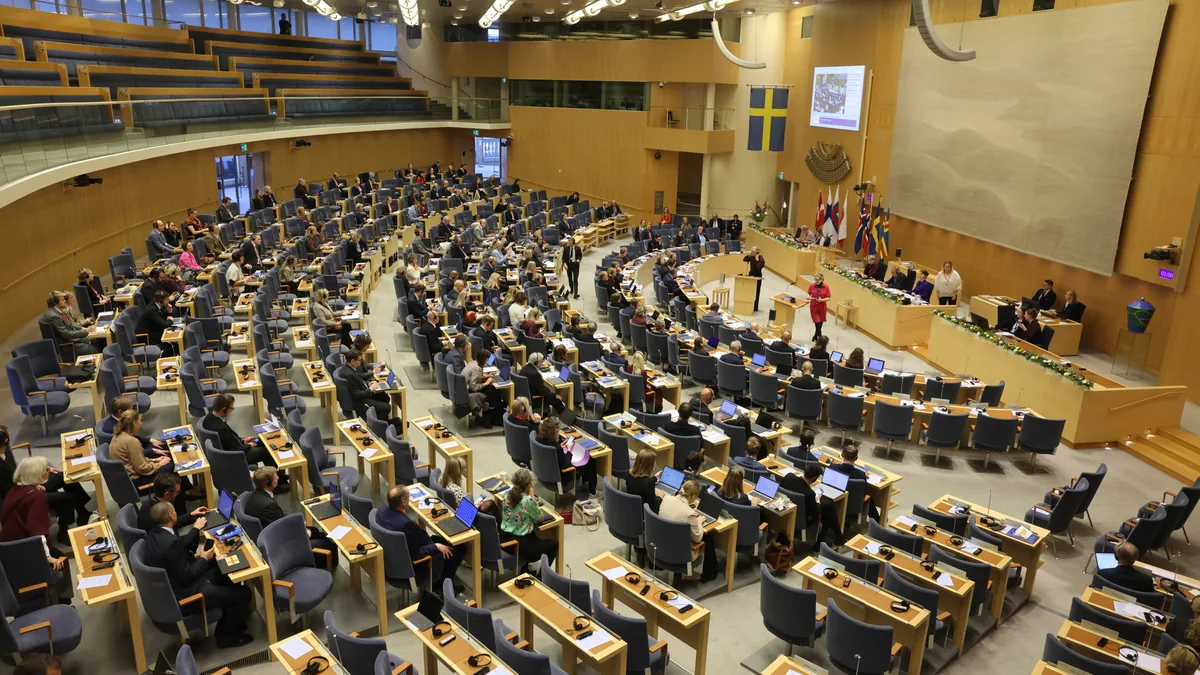
Photo: Melker Dahlstrand / imagebank.sweden.se