 Sunil Rao
On 15 October 2026, the Swedish Migration Agency (Migrationsverket) officially announced the extension of its operational freeze on issuing rejection decisions in asylum cases for nationals of Iran and Lebanon. The decision halts all negative protection rulings and forced deportations to both countries through at least 12 February 2027.
The operational halt reflects the severe, fluid, and unpredictable security environment across the Middle East. According to the migration authority, ongoing conflicts, cross-border bombardments, political crackdowns, and structural instability make it impossible to gather the verifiable factual foundation required to carry out forward-looking risk assessments under international law.
The measure extends an earlier pause first instituted for Iran on 14 January 2026 and for Lebanon on 6 March 2026, both of which had expired on 12 October. For thousands of asylum applicants residing in Sweden, the announcement provides temporary protection from forced expulsion, but it also prolongs a state of profound legal limbo.
1. The Legal Rationale: Non-Refoulement and Country Information Gaps
Under Swedish administrative jurisprudence and international treaty obligations, an asylum authority cannot reject an international protection claim without conducting a comprehensive, forward-looking assessment (framåtsyftande bedömning) of the risks an applicant would face upon return.
This fundamental principle is codified in Chapter 12 of the Swedish Aliens Act (Utlänningslagen 2005:716), Article 3 of the European Convention on Human Rights (ECHR), and the 1951 United Nations Refugee Convention. Together, these frameworks establish the absolute legal prohibition against non-refoulement: the expulsion of individuals to territories where they face a credible risk of torture, inhuman or degrading treatment, capital punishment, or arbitrary violence arising from armed conflict.
| Country | Initial Pause Date | Extended Expiry Date | Key Assessment Drivers |
|---|---|---|---|
| Iran | 14 January 2026 | 12 February 2027 | Intensified domestic political crackdowns, arbitrary detentions, state security trials, and regional military volatility. |
| Lebanon | 6 March 2026 | 12 February 2027 | Widespread military strikes, infrastructure destruction, mass displacement, economic collapse, and airspace disruption. |
In its 15 October announcement, Migrationsverket concluded that security conditions in both Iran and Lebanon remain too volatile and unstable (föränderlig och svårbedömd) to reliably determine individual risk profiles. Without verifiable baseline data on local security conditions, safe internal flight alternatives, and operational transit corridors, issuing a legally robust rejection (avslagsbeslut) is impossible.
2. Rejections Paused vs. Approvals Active: A Crucial Distinction
A common misconception surrounding Migrationsverket's operational pauses is that all casework for Iranian and Lebanese nationals has ground to a complete standstill. This is incorrect.
The agency's directive specifically prohibits rejection decisions and accompanying expulsion orders. In contrast, positive asylum decisions can continue to be processed and granted:
- Applications with Clear Protection Grounds: If an applicant provides well-documented evidence demonstrating individual persecution-such as documented political opposition, religious apostasy, sexual minority status, or state harassment-caseworkers have full legal authority to grant refugee status (flyktingstatus) or subsidiary protection (alternativt skyddsbehövande).
- Borderline or Insufficiently Evidenced Claims: Where caseworkers would normally issue a rejection due to insufficient evidence or lack of verified individual risk, the decision must be put on hold. The case cannot be finalized with a negative verdict while the country conditions pause is active.
- Deportations Halted: The Swedish Police Authority (Polisen) and Migrationsverket cannot execute pending deportation orders to Iran or Lebanon, as legal obstacles to enforcement (verkställighetshinder) exist across both territories.
3. The Country Context: Why Iran Remains Unsafe for Return
The operational freeze for Iran has been in effect since mid-January 2026, following a succession of internal crises, intense domestic surveillance, and heightened military escalation across the Persian Gulf region.
Swedish migration caseworkers assess Iranian claims against several severe human rights indicators:
- Targeting of Political Dissidents and Protesters: Iranian authorities have expanded automated digital surveillance and judicial penalties against individuals participating in protests, labor strikes, civil rights organizing, or online dissent. Detainees face Revolutionary Courts without access to independent legal representation.
- Severe Persecution of Religious Converts and Minority Groups: Individuals who have converted from Islam to Christianity, members of the Baha'i community, and secular activists face harsh prison sentences on national security charges such as "corruption on Earth" (mofsed-e-filarz).
- Heightened Border and Flight Vulnerabilities: Returning failed asylum seekers to Tehran under current conditions presents severe operational and humanitarian risks. Individuals returning from Western nations with documented political profiles or Western ties risk immediate interrogation and detention upon arrival at Imam Khomeini International Airport.
4. The Country Context: Destruction and Displacement in Lebanon
The situation in Lebanon worsened dramatically throughout 2026 as regional cross-border hostilities between Israel and Hezbollah escalated into widespread infrastructure destruction, civilian displacement, and the severe destabilization of central state institutions.
The operational drivers behind the Lebanese asylum freeze include:
- Mass Internal Displacement: Hundreds of thousands of Lebanese citizens have been displaced from southern Lebanon, the Bekaa Valley, and the southern suburbs of Beirut (Dahiyeh). Available housing, emergency shelters, and municipal resources in Beirut and northern governorates are completely overwhelmed.
- Collapse of Basic Civil Infrastructure: Prolonged shortages of electricity, clean water, medical supplies, and municipal services have compromised basic survival standards across major urban centers.
- Transit and Aviation Disruptions: Beirut-Rafic Hariri International Airport has suffered repeated commercial flight cancellations, insurance surcharges, and operational interruptions, eliminating the logistical possibility of executing orderly and dignified voluntary or forced returns.
Case Study: Navigating LMA Status During the Rejection Freeze
In April 2026, Farhad, a 29-year-old software engineer from Shiraz, Iran, applied for asylum in Stockholm after receiving summonses from Iranian security forces related to his social media posts supporting civil liberties. During his initial interview, Migrationsverket verified his identity documents but signaled that his case required deeper investigation.
When the previous pause approached its 12 October expiration, Farhad feared a swift rejection and a 30-day voluntary return deadline. With the 15 October extension to 12 February 2027:
- Farhad's file cannot receive a rejection decision, ensuring he cannot be placed in detention or served an expulsion notice.
- Because Farhad submitted his valid Iranian passport and cooperated fully with authorities, his LMA card is stamped with active AT-UND status (work permit exemption).
- Farhad secured a full-time contract with a Swedish tech startup in Kista, earning 42,000 SEK per month. His employer pays all statutory taxes and collective agreement insurances.
If Migrationsverket eventually grants his asylum claim, he will receive temporary protection status. Alternatively, if his asylum claim is later rejected when conditions normalize, having continuous employment above the statutory work permit floor (34,470 SEK/month in 2026) allows him to explore changing legal tracks from asylum to a regular work permit (spårbyte), provided statutory transition criteria are met.
5. Everyday Realities: Rights, Restrictions, and LMA Card Rules
While the freeze prevents deportations, prolonged waiting periods create logistical and psychological hurdles. Iranian and Lebanese asylum seekers in Sweden must navigate specific statutory rights and limitations under the Reception of Asylum Seekers Act (LMA 1994:137):
A. The Right to Work (AT-UND Exemption)
Asylum seekers are generally prohibited from working in Sweden unless they receive a specific exemption called AT-UND (arbetstillstånd utan uppehållstillstånd).
To obtain and maintain AT-UND during the decision freeze:
- The applicant must present valid national identification documents (such as a valid passport, national identity card, or birth registry extracts) or demonstrate that they have actively attempted to procure identity records.
- The individual's asylum claim must not be deemed manifestly unfounded or subject to transfer under the Dublin III Regulation.
- AT-UND is printed directly on the applicant's physical LMA card. Employers must verify this stamp and register the hiring with Skatteverket to ensure lawful payroll operations.
B. Housing and Daily Allowances (Dagersättning)
Applicants waiting under the decision pause continue to receive reception benefits:
- Accommodation (ABO vs. EBO): Applicants can live in Migrationsverket's collective housing facilities (anläggningsboende - ABO) or arrange their own housing (eget boende - EBO). However, applicants who choose to live in designated socio-economically vulnerable neighborhoods forfeit their right to daily allowances under Sweden's strict EBO regulations.
- Financial Support: Single adults living in facilities where food is not provided receive a modest statutory daily allowance (dagersättning) of 71 SEK per day. In accommodation where free meals are provided, the allowance drops to 24 SEK per day.
C. Healthcare and Schooling Rights
Under Swedish healthcare legislation:
- Adult Asylum Seekers: Have statutory access to emergency medical and dental care, healthcare that cannot be deferred (vård som inte kan anstå), maternity care, contraception counseling, and health examinations.
- Children Under 18: Enjoy the exact same rights to comprehensive medical care, prescription drugs, dental treatment, and municipal primary and secondary education as Swedish citizen children, free of charge.
D. Travel and Family Restrictions
Living under an operational pause imposes strict legal boundaries:
- No International Travel: Asylum seekers have no travel documents and cannot cross international borders. Leaving Sweden immediately invalidates your pending application and terminates LMA benefits.
- No Family Reunification: Spouses, children, and parents living abroad cannot apply for Swedish family reunification visas while an applicant's case is paused. Family sponsorship requires an active, approved residence permit.
6. Strategic Checklist for Applicants and Legal Representatives
For individuals affected by the Iran and Lebanon decision freeze, waiting passively is not recommended. Legal counsel and community advocates suggest the following proactive measures:
- Verify AT-UND Validity on Your LMA Card: Check the physical expiration date on your LMA card. If your card is expiring or if AT-UND is not clearly indicated, book an appointment at your local Migrationsverket service center immediately to request renewal and re-verification.
- Keep Your Residential Address Updated: Under Swedish law, failure to report an address change to Migrationsverket can result in missed summonses, presumed case abandonment, and the loss of financial allowances. Ensure your c/o address and apartment number are correctly registered.
- Consolidate Additional Asylum Documentation: Use the extended timeframe to gather supplementary evidence corroborating your protection claim. Secure certified translations of court summonses, medical reports, or written testimonials from home country contacts.
- Pursue Legitimate Employment: If you hold AT-UND, securing verifiable employment in the formal labor market provides vital financial independence and maintains your social security contributions.
- Monitor Official Announcements: Migrationsverket explicitly noted that it may alter or cancel the pause before 12 February 2027 if security assessments shift. Keep in regular contact with your assigned public legal counsel (offentligt biträde).
NordDaily Action Plan: If you or family members are awaiting an asylum determination from Iran or Lebanon, understand that the freeze until 12 February 2027 protects you from expulsion but leaves your case open. Check your LMA card today to confirm that your AT-UND work exemption is active, ensure all residential address details on file with Migrationsverket are accurate, and continue working closely with your legal counsel to strengthen your individual evidence portfolio.
Official Legal Sources & Authorities
- Migrationsverket Official Press Notice (15 October 2026): Prövning av skyddsskäl fortsatt pausad för Iran och Libanon
- Utlänningslag (2005:716) - Swedish Aliens Act (Chapter 12 on Enforcement and Non-Refoulement)
- Lag (1994:137) om mottagande av asylsökande m.fl. (LMA - Reception of Asylum Seekers Act)
- European Convention on Human Rights (Article 3: Prohibition of Torture and Inhuman or Degrading Treatment)
- UNHCR: The 1951 Convention Relating to the Status of Refugees
Related articles
Frequently asked questions
What does Migrationsverket's decision to pause asylum rejections mean?
Migrationsverket has instructed its caseworkers not to issue negative asylum decisions (avslag) or deportation orders to individuals from Iran and Lebanon. The volatile security situation makes it legally impossible to conduct safe, forward-looking risk assessments or execute forced returns.
Are positive asylum decisions also paused for Iran and Lebanon?
No. The pause strictly applies to rejections and expulsion orders. Caseworkers are legally permitted to approve applications and grant protection status (asyl or skyddsstatus) if an applicant's individual grounds are fully substantiated under established legal criteria.
How long is the current decision freeze valid?
The newly extended operational recommendations remain in force until at most 12 February 2027. However, Migrationsverket continuously monitors developments in both countries and may amend or cancel the policy earlier if security conditions change.
Can Iranian and Lebanese asylum seekers work while waiting for a decision?
Yes, provided they hold an active AT-UND exemption (arbetstillstånd utan uppehållstillstånd) stamped on their LMA card. To qualify for AT-UND, applicants must submit valid identity documents or actively assist in verifying their identity, and their claim must not be manifestly unfounded.
What happens to deportations and enforcement actions currently scheduled?
Forced removals and voluntary return proceedings to Iran and Lebanon are suspended. Police and migration enforcement units cannot execute expulsion orders to regions where non-refoulement obstacles (verkställighetshinder) exist under Chapter 12 of the Swedish Aliens Act.
Can asylum seekers travel outside Sweden during this prolonged wait?
No. Asylum seekers are not permitted to travel abroad while their application is pending. Leaving Sweden or returning to your country of origin immediately terminates your application and will result in the loss of LMA housing, daily allowances, and legal residency claims.
Estimate only. Talk to a qualified adviser before acting on anything here.
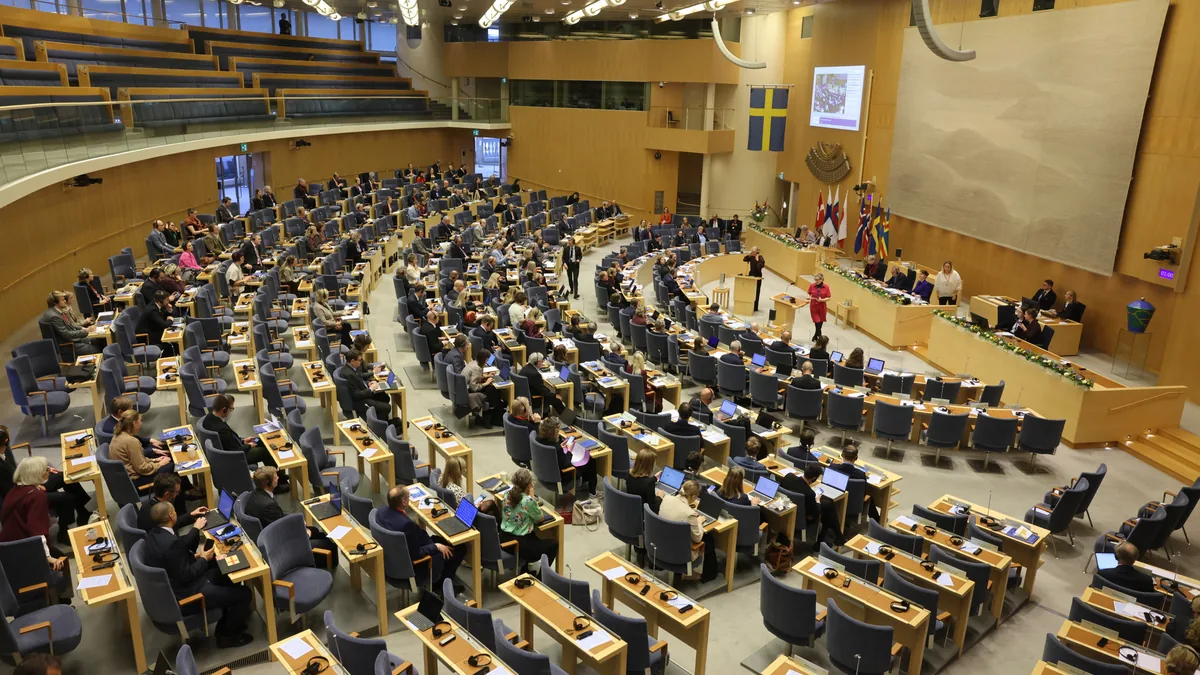
Photo: Melker Dahlstrand / imagebank.sweden.se