 Sunil Rao
If you are moving to Sweden with school-age children, one of the first surprises is how sharply the school system splits into two very different worlds: tuition-free bilingual Swedish schools and fee-paying international schools.
At first glance, dozens of schools in Stockholm, Gothenburg, Malmö, and Uppsala sound similar because they advertise English instruction, IB programs, or international profiles. In reality, Swedish law treats them completely differently when it comes to tuition fees, admissions queues, and how much of the school day is taught in English versus Swedish.
Understanding those rules before you sign a housing lease or miss a municipal school-choice window (skolval) can save your family both long commutes and tens of thousands of kronor in unexpected fees.
At a Glance: Three School Tracks in Sweden
| School Type | Tuition Fee | Language Split | How Admissions Work |
|---|---|---|---|
| Municipal Swedish School (Kommunal skola) | SEK 0 (100% tax-funded, includes hot lunch) | Primarily Swedish (plus English as a subject and optional mother-tongue classes) | Guaranteed spot based on proximity (närhetsprincipen) and municipal skolval |
| Bilingual Swedish Independent School (Friskola) | SEK 0 (100% tax-funded, includes hot lunch) | Swedish curriculum with up to ~50% of classes taught in English | Often depends on early queue registration (kötid) plus sibling priority |
| Chapter 24 International School (IB / British / US / French / German) | Annual tuition fees apply (varies by school and grade) | Up to 100% English (or French/German), following an international curriculum | Direct application to the school; primarily intended for temporary expats or international movers |
1. Tuition-Free Bilingual Schools vs. Chapter 24 International Schools
Sweden's Education Act (Skollagen 2010:800) draws a strict legal line between standard Swedish compulsory schools and formal international schools regulated under Chapter 24.
Regular Bilingual Schools (Friskolor)
Well-known bilingual networks in Sweden - such as Internationella Engelska Skolan (IES), Futuraskolan's Swedish-curriculum branches, and several municipal bilingual profiles - operate as regular Swedish schools. That means they follow the Swedish national curriculum (Lgr22, moving toward Sweden's 10-year Lgr28 reform), charge zero tuition, serve free daily hot school lunches, and provide free textbooks.
However, because they operate under the standard Swedish school permit rather than Chapter 24, the Swedish Schools Inspectorate (Skolinspektionen) enforces a language balance rule: regular bilingual schools generally cannot teach more than roughly 50% of total teaching hours in English. The remaining half of subjects - along with Swedish language classes - are taught in Swedish. For families planning to stay in Sweden long term, this mix is often ideal because children keep up in English while learning Swedish naturally.
Chapter 24 International Schools
By contrast, schools authorized under Chapter 24 of the Education Act (and the Ordinance on International Schools, Förordning 2015:801) teach an international curriculum - such as the International Baccalaureate (IB Primary Years, Middle Years, or Diploma), British IGCSE/A-Levels, American, French, or German curricula - and can deliver up to 100% of instruction in a foreign language.
Because Chapter 24 schools sit outside Sweden's standard tuition-free compulsory framework, they are legally allowed to charge annual tuition fees. Under Swedish regulations, Chapter 24 international compulsory schools are specifically intended for children staying in Sweden temporarily (for example, corporate transferees, diplomats, or researchers on multi-year assignments) or children who have already started an international education abroad and plan to return or move onward.
2. How School Choice (Skolval) and Queues Work
In Sweden, compulsory schooling currently starts in the autumn term of the year a child turns 6 (preschool class / förskoleklass, transitioning into Grade 1 of a 10-year compulsory school in autumn 2028). Each January or February, municipalities open the annual school-choice window (skolval) for families whose children are starting school or changing grade levels.
- Guaranteed municipal placement: Every child registered in a Swedish municipality has a legal right to a free school place near home, even if you arrive mid-year in September or November without a personnummer yet.
- Independent school queues (kötid): Popular bilingual friskolor receive far more applications than seats. Most admit students strictly by the date you placed your child in that school's online queue (often years in advance) alongside sibling priority. Note that you usually do not need a Swedish BankID to register on independent school websites from abroad, though rules vary by provider.
- High school (Gymnasium, ages 16 to 19): At upper-secondary level, queue time does not decide admission. Instead, students apply based on their Grade 9 merit rating (meritvärde), and many Swedish municipalities offer tuition-free IB Diploma programs inside public municipal upper-secondary schools.
3. Free Language Support for Expat Children
If your child enters a Swedish-medium municipal school without speaking a word of Swedish, you do not need to pay for private tutoring to bridge the gap. Swedish municipalities provide two distinct statutory language supports:
- Swedish as a Second Language (Svenska som andraspråk, SVA): Newly arrived children receive tailored Swedish instruction (often starting in a welcoming introduction class or förberedelseklass) until they are ready to join regular lessons full time.
- Mother-Tongue Tuition (Modersmålsundervisning): If one or both parents speak a non-Swedish language at home as the child's daily language and the child already has basic knowledge of it, you can apply through your school for weekly mother-tongue lessons at no extra cost (subject to a minimum of five eligible pupils in the municipality and teacher availability).
4. Don't Forget After-School Care (Fritidshem)
Swedish primary school days are often shorter than a full-time workweek, typically finishing between 13:00 and 14:30. For children aged 6 to 12, both municipal and bilingual Swedish schools usually run an on-site after-school center (fritidshem) covering mornings before class, afternoons until around 17:00 or 18:00, and school holiday weeks (lovfritids).
Unlike private international after-school programs, standard Swedish fritidshem fees are capped under the national maxtaxa system (2% of gross household income up to a monthly ceiling for the first school-age child, and 1% for the second). You can read the exact 2026 fee breakdown in our Swedish Preschool and Fritidshem Fee Guide.
Practical Action Checklist for Expat Parents
NordDaily Practical Takeaway: If your move to Sweden is even slightly likely to last more than two years, apply to both your local municipal school and bilingual friskolor queues right away - and do not assume every school with "English" or "International" in its name is either 100% English-speaking or tuition-free.
Always ask two direct questions before applying: first, whether the school operates under the standard Swedish curriculum (free, max 50% English) or Chapter 24 (fee-paying, international curriculum), and second, whether your employer's relocation package covers Chapter 24 tuition fees (noting that employer-paid school fees in Sweden can have tax implications unless covered under specific rules).
- Join queues immediately: Even if your child is still a toddler, place them in bilingual friskola queues in your target city as soon as you know you are relocating.
- Contact your municipality's welcome unit: Larger cities (such as Stockholm, Gothenburg, Malmö, and Uppsala) have dedicated reception centers for newly arrived families to help place children immediately upon arrival, even before your personnummer arrives.
- Request mother-tongue tuition early: Ask the school administrator for the modersmålsundervisning form during your enrollment meeting so your child starts in the next semester.
- Compare family costs: Factor school lunches (free in Swedish schools), fritidshem caps, and any Chapter 24 tuition into your household plan with our Sweden Family Cost of Living Planner.
Official Sources
- Swedish National Agency for Education (Skolverket): Rules on compulsory schooling, skolval, Swedish as a Second Language (SVA), and mother-tongue tuition (modersmålsundervisning).
- Swedish Schools Inspectorate (Skolinspektionen) & Swedish Education Act (Skollagen 2010:800, Chapter 24): Authorization rules for international schools, tuition exemptions, and the ~50% foreign-language limit in standard bilingual schools.
Frequently asked questions
Are international and bilingual schools free in Sweden?
It depends on the school's legal permit. Regular municipal schools and bilingual Swedish independent schools (friskolor, such as Internationella Engelska Skolan) are 100% tuition-free and tax-funded. By contrast, formal international schools authorized under Chapter 24 of the Education Act - such as many IB, British, American, French, or German schools - are allowed to charge annual tuition fees.
Why do regular bilingual schools in Sweden limit English to 50%?
Under Swedish Education Act rules overseen by Skolverket and Skolinspektionen, regular Swedish compulsory schools (including bilingual friskolor) follow the Swedish national curriculum and cannot teach more than roughly 50% of total instruction in English without holding a special Chapter 24 international school permit.
How do queues work for popular bilingual schools in Sweden?
Independent Swedish schools (friskolor) are allowed to admit students based on queue time (kötid) - often counted from the child's birth or registration date - as well as sibling priority. Because popular schools in Stockholm, Gothenburg, and Malmö can have multi-year waitlists, expat families should register as early as possible.
Can my child get mother-tongue classes in a regular Swedish school?
Yes. Under Swedish law, children who speak a language other than Swedish at home as a daily communication language and have basic knowledge of that language can apply through their municipality for free mother-tongue tuition (modersmålsundervisning), provided the municipality can arrange a teacher and at least five eligible students apply.
Estimate only. Talk to a qualified adviser before acting on anything here.
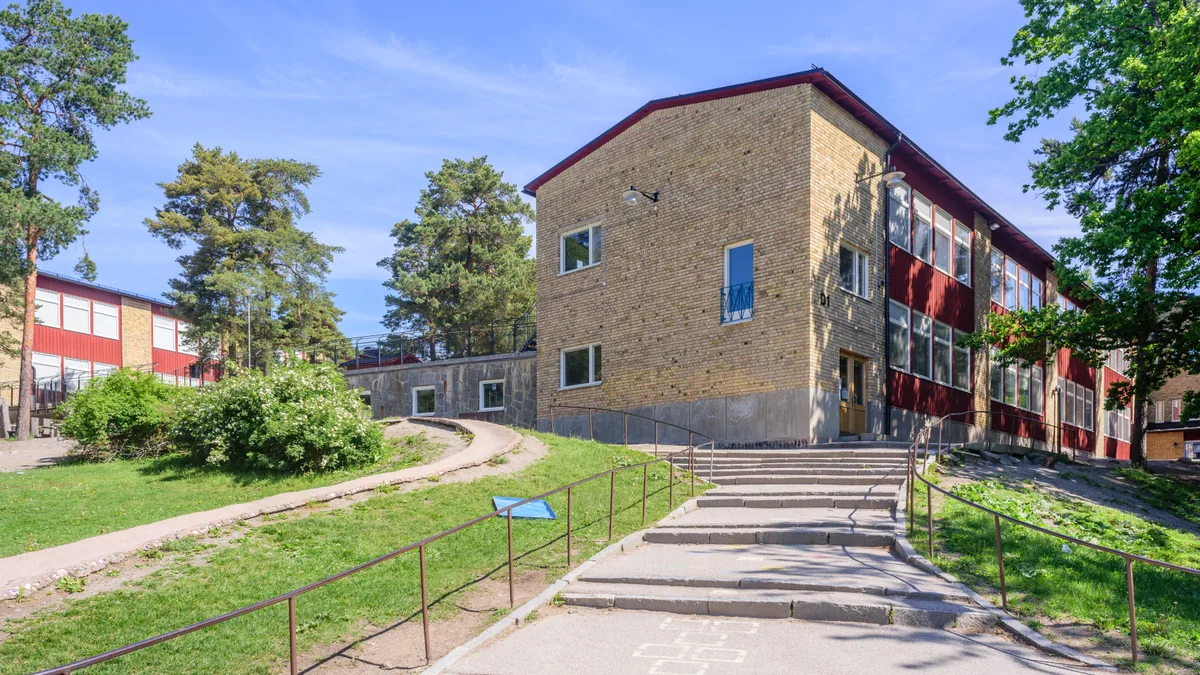
Photo: Wikimedia Commons / Arild Vågen (CC BY-SA 4.0)